Get Full Government Meeting Transcripts, Videos, & Alerts Forever!
Get email alerts on the Zoning Overhaul topic
No spam. Unsubscribe anytime.
Commission flags ordinance inconsistencies, industrial capacity and measurement gaps in broader zoning review
Summary
During the June 16 meeting, commissioners identified drafting inconsistencies across the township's zoning code (TDR/IMU language), discussed industrial (GI) district capacity and data-center implications, and recommended objective standards for vibration measurement and environmental studies.
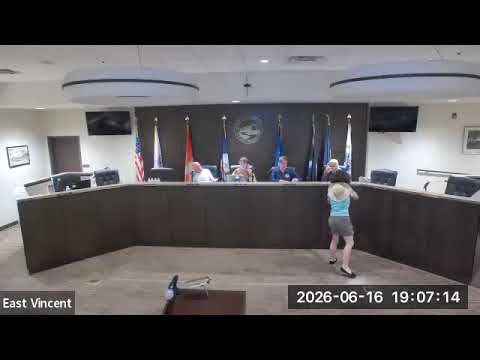
The East Benson Township Planning Commission used its June 16 meeting to outline a broader, methodical clean-up of township zoning language after recent conditional-use proceedings exposed inconsistencies and gaps.
Commissioners said the county-drafted ordinance requires a section-by-section review to align terms (for example, transfer-of-development-rights language and whether specific districts are receiving zones) and to ensure the township can defend its code against legal challenges. A recurring example was the Pennhurst data-center conditional-use review, which highlighted gaps and ambiguous uses.
What was raised: - Ordinance cleanup and 'fair share' uses: Commissioners emphasized the need to rework sections where wording conflicts across the code (TDR and IMU examples were cited). The county draft added new uses — such as data centers — and the commission wants to make sure the ordinance reflects current demand and provides legally defensible 'fair share' opportunities.
- General Industrial (GI) district capacity: Commissioners noted the GI district is limited (described as roughly 88 acres) and questioned whether utility capacity (electric service) and other infrastructure make remaining GI parcels viable for industrial uses. Members suggested the township obtain information from utility providers on available power capacity for remaining parcels.
- Objective measurement standards (vibration): A commissioner flagged language that effectively requires human perception of vibration rather than allowing objective devices. Panelists agreed measurable standards (for example, seismographs for blasting or vibration testing) should be permitted and will be revisited in drafting.
- Environmental study thresholds: Commissioners debated whether environmental-impact studies and wetland delineations should be optional ('may require') or mandatory when certain triggers are present. Several members favored stronger, clearer thresholds and the possibility of deferring to the township engineer for a site-specific determination.
Public comment and other business: A resident called attention to an inconsistency between the zoning map and zoning code labels for the PO (Professional Office) district and asked about the process to request a bus-stop sign in a neighborhood concerned about child safety; staff requested the resident email location details for follow-up.
Next procedural steps: The commission will continue reviewing the county-drafted ordinance section by section, prioritize AP and RC at the next meeting, and have staff compile specific drafting items (including vibration and TDR inconsistencies) to incorporate into the red-line revision to be sent to the township planner.