Get Full Government Meeting Transcripts, Videos, & Alerts Forever!
Get email alerts on the Zoning Conservation Subdivision topic
No spam. Unsubscribe anytime.
Planning commission begins review of proposed conservation residential ordinance
Summary
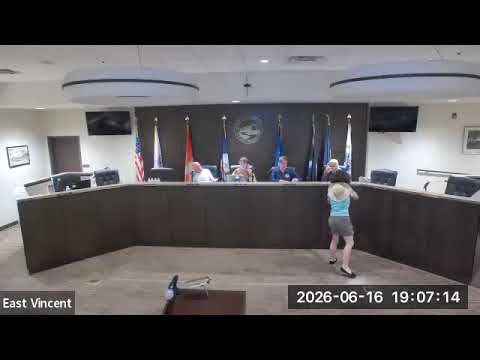
The East Benson Township Planning Commission began detailed review of a county-drafted ‘conservation residential development’ section on June 16, debating whether to make the option by-right or conditional, how to define common open space, and whether septic and stormwater facilities should count as open space.
The East Benson Township Planning Commission on June 16 began a multi-meeting review of a county-drafted zoning update that would replace the township’s open-space cluster option with a new “conservation residential development” section.
Commissioners focused on several high-level policy questions: which districts should allow the option, whether it should be a by-right use or a conditional use, how to define and protect common open space, and whether sewage disposal and stormwater management facilities should be permitted within that open space.
Why it matters: the draft would allow clustering of lots so the same base density is retained while preserving larger contiguous areas of natural resources. Chair (speaker 1) described the approach as “density neutral” — keeping the base density of each district but permitting homes to be concentrated so more land remains undeveloped. Commissioners said the change could help protect wetlands, woodlands and prime farmland, but could also be misused without careful drafting.
Key points from the meeting: - Districts and application: Commissioners noted the county draft would apply the conservation option to the Agricultural Preservation (AP), Rural Conservation (RC) and Low Density Residential (LR) districts. Some members objected to extending the option into AP, saying agricultural protection could be undermined if not tightly written.
- By-right vs conditional use: The commission debated whether the option should be by-right (allowing developers to implement it without conditional-use review) or remain a conditional use subject to commission and board scrutiny. Commissioners worried that a by-right path could limit the township’s ability to impose site-specific conditions; others noted developers may prefer by-right certainty.
- Four-step conservation design and open-space percentages: Elaine (speaker 4) described the draft’s four-step process: (1) set aside mapped natural resources (wetlands, streams, steep slopes, prime farmland) — in AP the draft would require a 60% set-aside, leaving 40% for development; (2) locate house sites in the remaining area; (3) design roads to minimize impacts; and (4) size lots so most land remains common open space.
- Minimum lot size and housing types: Commissioners discussed retaining no minimum lot size to preserve flexibility versus setting a minimum (examples floated included quarter-acre or half-acre minima). Chair said flexibility could allow smaller, lower-cost housing types, but several members said small-lot cluster housing might be more appropriate in higher-density districts.
- Definitions and buffers: The commission flagged confusion between terms in the draft — “open space,” “common open space,” and a removed term, “restricted open space.” Chair suggested using the term “common open space” for land intended for resident use and keeping a 25-foot buffer from structures so private backyards aren’t designated as common open space.
- Sewage and stormwater concerns: Several commissioners objected to allowing septic systems or stormwater basins to count as common open space. One commissioner recounted a nearby example, saying developers had clustered houses largely to create a large spray field for sewage, and warned the draft could enable similar outcomes. As the meeting recorded it: “they were clustering the houses to give themselves a 20 acre spray field for the sewage.” Commissioners discussed removing above-ground stormwater facilities and above-ground sewage disposal structures from the open-space definition to avoid incentivizing such siting.
- Historic-resource incentive: The draft includes a density bonus that would allow an applicant to add up to two dwelling units for renovating or adaptively reusing a structure listed in the Chester County Historic Resource Atlas. Some commissioners questioned awarding a bonus rather than requiring preservation or clarifying who would maintain restored structures.
Next steps: The commission asked staff to prepare a marked-up redline of the conservation residential development section capturing the commission’s policy direction. The chair said the draft redline will be circulated to commissioners and then sent to township planner Rick Traley for legal review; the commission will also seek input from the local historic commission on the historic-resource provisions. Commissioners scheduled future meetings to continue through AP and RC provisions.
The commission held public comment at the end of the meeting and closed without taking a final vote on ordinance language. The review will continue at upcoming meetings.