Get Full Government Meeting Transcripts, Videos, & Alerts Forever!
Get email alerts on the Recycling Collection topic
No spam. Unsubscribe anytime.
Indian Rocks Beach weighs future of curbside recycling as Waste Connections contract nears end
Summary
City commissioners held a work session to review recycling costs, contamination data and options — including continuing curbside service, switching to drop-off/hybrid collection, or issuing an RFP — and directed staff to audit the current contract and return with recommendations before the next meeting.
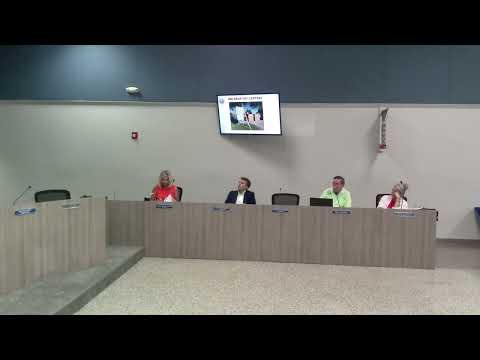
Indian Rocks Beach Mayor Larvan and the City Commission spent a work session on June 26 reviewing the city’s curbside recycling program as the contract with Waste Connections approaches its December 31 expiration. Public Works Director Dean Charman told the commission that the curbside program accepts cardboard, aluminum, paper, plastic and glass, that local recycling costs are approximately $38,000 a month and that the city projects about $453,000 for the fiscal year.
Charman summarized participation and contamination data, saying the city’s composition sample reported roughly 22–23% contamination while industry and county-level facility numbers commonly run near 25%. "Recycling is the process of collecting and processing materials that would otherwise be thrown out as trash and possibly turning them into new products," Charman said in his presentation to describe program goals and limits.
The commission discussed options for the program, including discontinuing curbside service (which would require 60 days’ notice to the contractor), moving to a hybrid drop-off model that accepts only certain commodities, or issuing an RFP or piggybacking on another municipality’s contract to test the market. Commissioners emphasized trade-offs among convenience, participation and fiscal responsibility; several noted that curbside service generally produces higher participation than drop-off programs.
Residents who testified at the meeting voiced sharply divided views. Diane Cannon, a local nonprofit volunteer who tracks recycling in the city, said she frequently sees contaminated carts and questioned whether the curbside system reliably yields usable material: "I don't see it left after the recycling is picked up," she said, urging stronger education and enforcement. Other speakers, including Kelly Sizemore and John Vance, recommended a more focused approach — for example, maintaining collection for cardboard and aluminum only — and some asked for an independent audit of what the contractor actually delivers to processors.
Pinellas County Solid Waste Director Paul Sacco and recycling outreach manager Emily LaMay briefed the commission on regional operations and cautioned about conflating waste-to-energy recovery with recycling. "The recovery facility that's incinerating the garbage is not recycling," Sacco said, explaining that much of what arrives at the county facility is processed for energy and that metals can be recovered from ash, but that incineration is distinct from material recycling. Sacco also noted tipping fees (approximately $58 currently, rising later in the year) and warned that eliminating residential recycling would incrementally shorten the county landfill’s life.
Commissioners asked staff to pursue data and contract homework before making a policy decision: review the current Waste Connections contract for contamination and audit provisions; request recent route- and truck-level composition data; invite Waste Connections to brief staff or the commission; and examine piggyback or RFP options and the county’s contract guidance. The county offered templates and a recycling workshop invitation for municipal staff to learn best practices.
The commission did not take a formal vote on program policy. Instead, commissioners directed staff to return with contract audit results and recommendations at or before the July 14 meeting and left open the possibility of a subsequent special session. A closing motion to adjourn passed on an affirmative voice vote.
Next steps include staff review of contract language related to contamination and rejection, a possible audit of recent loads, exploring procurement options (RFI/RFP or piggyback), and greater emphasis on education, tagging or enforcement if curbside service continues.