Get Full Government Meeting Transcripts, Videos, & Alerts Forever!
Get email alerts on the Urban Forestry topic
No spam. Unsubscribe anytime.
Green Isle adopts new tree preservation ordinance, establishes penalties for violations
Summary
After a second reading the council adopted Ordinance 2024-02 establishing tree preservation plans for certain permits, replacement requirements, authority for a city forester to declare hazardous trees, and fines up to $1,000 or 90 days' jail for violations.
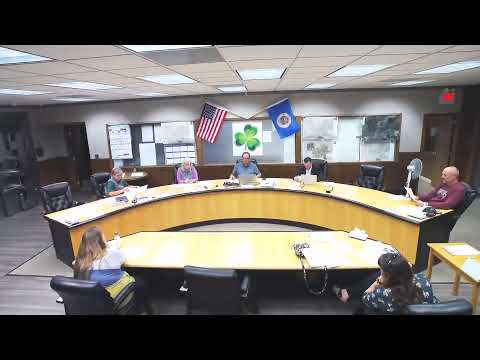
The City Council of Green Isle voted on Oct. 8 to adopt Ordinance 2024-02, a tree preservation and management ordinance intended to guide protection and replacement of significant and specimen trees.
The ordinance requires a tree preservation plan for land-use, grading, or building permits involving removal of significant or specimen trees. It defines size thresholds for "significant" and "specimen" trees, lays out replacement requirements (replacement saplings minimum two-inch caliper; greater mitigation formulas where 20% or more of significant tree diameter inches are removed), and gives the city forester authority to declare diseased or hazardous trees and require removal within 30 days.
The ordinance also includes penalties for violations: on conviction a fine not exceeding $1,000, imprisonment not exceeding 90 days, or both, plus the cost of prosecution. The council completed a second reading and adopted the ordinance on a roll-call vote.
Supporters said the ordinance will help preserve canopy, protect stormwater benefits and habitat, and support long-term quality of life in town. A council member asked how the rules would apply to trees in county ditches and to private property disputes, and staff said many neighbor-to-neighbor issues would remain civil matters unless a tree is diseased or poses a public hazard. The ordinance will take effect after publication as required by law.