Get Full Government Meeting Transcripts, Videos, & Alerts Forever!
Get email alerts on the Student Privacy topic
No spam. Unsubscribe anytime.
Board flags student-privacy concerns, calls for clearer surveillance and AI governance
Summary
Trustees spent an extended portion of the meeting urging clearer board policy on cameras, vendor data, retention, and limits on analytics; a board member urged restricting biometric or facial-recognition usage without explicit board approval and recommended annual reporting and improved public disclosures.
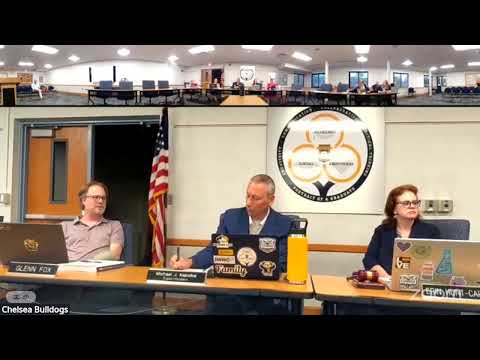
Trustees devoted a lengthy discussion on June 22 to surveillance, student privacy and emerging technologies after placing an item on the agenda that encompassed AI, instructional technology and privacy. Board member Dr. Fox led the conversation, urging the board to codify limits on how the district uses camera feeds, third‑party analytics and student-device monitoring.
Dr. Fox told the board that safety and privacy need not be mutually exclusive and recommended a set of governance measures including limiting surveillance to clearly justified locations, shortening retention and routinely deleting nonincident footage, restricting live‑feed access and audit logging, and prohibiting facial-recognition or other biometric analysis unless explicitly and separately approved by the board.
"I don't think that safety and privacy are mutually exclusive," Dr. Fox said, and urged the board to adopt policies that make data use and retention transparent to families and staff.
Trustees and administrators agreed on several practical steps: update board policy and administrative guidelines to set retention and access rules, use the policy committee to draft concrete language, review vendor privacy terms and prohibit AI model-training uses absent explicit approvals, and improve public disclosures (for example, an annual privacy notification explaining what is monitored and why). Staff said some vendor-review and access-control work is already in progress and that legal requirements such as FERPA and COPPA are being followed.
Several trustees proposed forming an advisory group or assigning the policy committee to provide ongoing review of emerging technologies and the district’s vendor contracts. The board also asked staff to prepare clearer communications about existing practices before the district’s upcoming millage outreach so community members better understand how school surveillance and student-data systems operate.
The discussion ended with agreement to return the topic to committee and to begin drafting policy-level guardrails to balance safety needs with student privacy.