Get Full Government Meeting Transcripts, Videos, & Alerts Forever!
Get email alerts on the Armistead Idd topic
No spam. Unsubscribe anytime.
Franklin aldermen approve Armistead infrastructure development district with deed-restriction condition
Summary
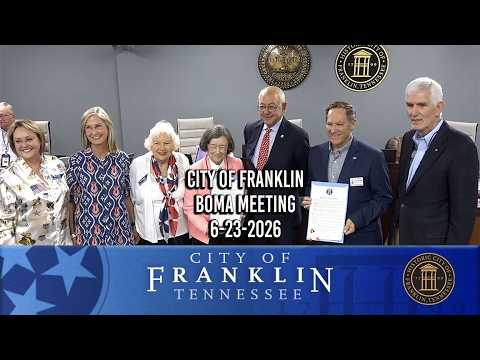
The Franklin Board of Mayor and Aldermen on June 23 approved Resolution 20 2656 establishing the Armistead Infrastructure Development District, conditioned on amending the petition to reserve 12 deed-restricted units targeted at households earning up to 120% of area median income and clarifying bond structuring. The vote was 6–1.
The Board of Mayor and Aldermen of the City of Franklin voted June 23 to approve Resolution 20 2656 to establish the Armistead Infrastructure Development District (IDD), adopting a condition that the developer amend the petition to commit 12 deed-restricted housing units targeted at households earning up to 120% of area median income.
City staff presented the petition and staff analysis, saying the Armistead development plan (previously approved Oct. 22, 2024) includes mixed uses, preserved open space and farmland, and that staff recommended approval if the petition added the 12 deed-restricted units. Staff also reported that the project merits a full credit for "extraordinary benefits and quality development," potential partial credit for infrastructure and public-service commitments, and no credit under the redevelopment criterion because it is a greenfield project.
During the public hearing, resident Janet Curtis urged clarity on the size and pricing of the homes proposed as "tiny lot" units, warning that if market prices approached $600,000 and special assessments applied, monthly costs could consume a large share of household income. "If it's a starter type home of 800, 900 ft², I can understand that," Curtis said; "I just caution you to make sure that everything is spelled out exactly the way it needs to be."
Council members debated an amendment addressing financing structure after staff noted that the project proposed structuring a portion of the financing at a 2:1 value-to-lien ratio. The amendment, adopted as a clarification in the resolution, states the 2:1 approach is acceptable because the developer agreed to use reasonable efforts to pay off that portion of the bonds prior to selling finished lots and to adhere to market-standard safeguards requested by the bond conduit issuer. Council members also sought and received clarity that the developer intended "tiny lots" with units roughly 800–900 square feet rather than 400 ft² tiny homes.
Alderman Caesar moved approval with the condition to add the 12 deed-restricted units; Vice Mayor Baggett seconded. On final roll call the board approved the amended resolution 6–1 (Alderman Peterson opposed). The adopted resolution directs that the petition be amended to include the deed-restriction commitment and incorporates the clarified financing language.
Next steps: city staff will document the required petition amendment and return any finalized legal documents or recorded commitments as part of establishing the Armistead IDD.