Get Full Government Meeting Transcripts, Videos, & Alerts Forever!
Get email alerts on the Housing Policy topic
No spam. Unsubscribe anytime.
Hilliard housing study projects 8,000 new homes by 2050, urges zoning changes and incentives
Summary
City staff and a housing steering committee presented a study projecting substantial housing need through 2050, citing affordability gaps and recommending zoning updates, pre‑approved plans, density incentives and a source‑of‑income protection ordinance; Council will consider adoption this summer.
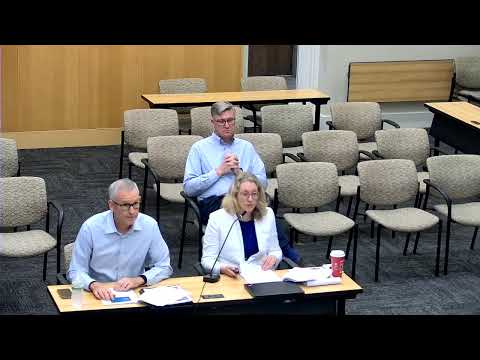
HILLIARD, Ohio — City staff and members of a 10‑member housing steering committee presented the Hilliard Housing Study to the City Council Committee of the Whole on June 22, highlighting population and housing growth projections, affordability shortfalls and a set of policy tools they say could expand housing variety and stabilize prices.
Deputy Planning Director Jackie Yeoman opened the presentation, saying the study was designed to “align housing policies and development with the current and future needs of the community” and defining key terms used throughout the analysis, including housing diversity and the industry standard 30% affordability threshold. The study was led by consultant Community Scale with guidance from the steering committee.
Steering Committee Chair Vince Papsidero told the Council the study builds on the city’s 2023 community plan and regional projections. “Hilliard is projected to have up to almost 24,000 housing units by 2050,” he said. “That’s a 52% increase and amounts to over 8,000 new homes coming to the community as a projection, which averages to about 350 households per year.”
The presentation summarized market indicators the committee says are driving affordability concerns. Presenters cited a median household income figure of about $143,000 and noted 42% of households earn less than $112,000; they also said only about 1% of home sales in 2025 were affordable to lower‑income households. Papsidero said home prices rose from $151 per square foot in 2020 to $220 per square foot at present — a roughly 46% increase — and that Franklin County rental vacancy was reported near 3.9% while ownership vacancy was under 1%.
The study highlighted a persistent mismatch between household size and housing stock: many households have one or two people while two‑thirds of existing homes have three or more bedrooms. Presenters emphasized a missing‑middle housing gap — duplexes, triplexes, small apartment buildings and accessory dwelling units — that the study says is absent from recent development.
To address those gaps, the study recommends a two‑part approach: a code update to enable appropriate missing‑middle forms and a toolkit of strategies to reduce barriers for smaller builders. High‑priority recommendations cited to Council included a sliding‑scale density approach to allow smaller multifamily forms in appropriate locations, a pre‑approved plans program to lower design and permitting costs for small developers and homeowners, a source‑of‑income protection ordinance to reduce discrimination against voucher holders, and targeted incentives such as density bonuses tied to affordability set‑asides.
Yeoman described the implementation plan as phased: staff and the steering committee recommend beginning with the four priority strategies and aiming for implementation within 12 months after Council adoption. She said staff will also track building permits by housing type, locations of new housing, median area income and price indicators to reassess strategy effectiveness over time.
During a roughly 75‑minute presentation and Q&A, Council members pressed staff on several topics including whether the study recommends housing aimed at recent graduates or rent‑to‑own models; Yeoman said the study did not identify a single project targeted to that demographic but that providing a wider range of housing types is intended to help more people at different life stages. Council members asked about demographic detail (age breakdowns were not projected by the consultant), the apparent continued demand for three‑bedroom homes alongside unmet demand for smaller units, and why missing‑middle housing is harder to build. Yeoman explained that per‑project fixed costs (design, permitting, legal) reduce the financial feasibility for small builders and said the pre‑approved plans program is intended to lower those transactional costs.
Council members raised infrastructure concerns tied to infill, particularly sewer capacity in Old Hilliard, and Yeoman said engineering constraints could limit near‑term infill even if zoning permissions change. On traffic, she said housing generally produces less traffic than many commercial uses and that site‑level traffic studies would be required for individual developments.
Questions also touched on manufactured housing and institutional (corporate) ownership of housing. Staff said thorough analysis of institutional ownership would require a separate study; manufactured housing was not studied in depth but could be researched further, with attention to building‑code implications.
On the policy tools to secure affordability, presenters said incentives such as density bonuses tied to affordable unit set‑asides, infrastructure assistance or financial tools like tax increment financing (where allowed) are common ways cities secure units at desired price points. The presentation cited a 60% area median income benchmark (about $67,000 per year in the study’s example) as a reference for deeper affordability targets that typically require subsidy.
The Housing Steering Committee forwarded a positive recommendation to Council, and staff said they plan to return to Council in July or August to request formal adoption of the study and present a 12‑month action plan. No formal motion or vote on the study occurred at the June 22 Committee meeting.
Why it matters: The study frames housing as both a supply and affordability challenge for Hilliard as regional growth continues. Council will be asked to decide whether to adopt the study and to authorize zoning and programmatic steps that could enable missing‑middle housing, targeted affordability incentives and local protections for voucher holders. Next steps include staff follow‑up on detailed feasibility work, additional data requests from the consultant, and an expected return to Council this summer for consideration of adoption.