Get Full Government Meeting Transcripts, Videos, & Alerts Forever!
Get email alerts on the Parking Study topic
No spam. Unsubscribe anytime.
Carbondale planning commissioners narrow parking‑study scope to downtown core, ask staff to refine RFP
Summary
Planning & Zoning commissioners on June 25 agreed to scope a two‑phase parking study that will start with an inventory and utilization analysis of the historic downtown core and nearby spillover blocks; policy options such as paid or managed parking and code changes were deferred to phase two.
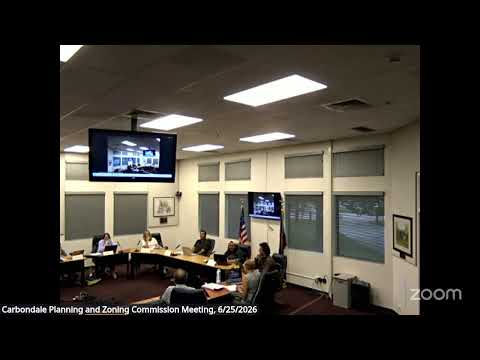
The Carbondale Planning & Zoning Commission on June 25 narrowed the scope of a proposed two‑phase parking study, directing staff to focus the first phase on an inventory and utilization analysis of the town’s historic downtown and adjacent spillover blocks and to return with a refined RFP for consultant proposals.
Commissioners opened the discussion after staff member Ryan summarized a memo from Jared outlining a phase‑one inventory and a phase‑two code‑and‑policy evaluation. Commissioners said the consultant’s initial work should document existing formal and informal parking, on‑street and private reservoirs, utilization by day and season, and signage and wayfinding before recommending management strategies.
The commission debated whether to define study boundaries by zoning or by a simpler street‑buffer around Main Street. Several members recommended a practical street‑based buffer (for example, Main Street with a three‑block spillover) so proposals would be comparable and respondents could advise refinements during the interview process. Commissioners also asked the consultant to model “loss scenarios,” noting several leased private lots the town relies on — identified in discussion as the Pepinos lot — could be redeveloped and quickly remove thousands of public parking spaces.
While commissioners discussed parking management tools, including timed or paid parking, the group agreed those strategies and any recommended code changes belong to a later phase after the study establishes data and scenarios. One participant read an excerpt from well‑known parking researcher Donald Shoup to illustrate how heated parking debates can become; commissioners nonetheless agreed to keep phase one narrowly data‑driven and reserve policy recommendations and public engagement for phase two.
Members also asked the consultant to layer applicable parking regulations and enforcement practices into the inventory so recommended options reflect what the town can implement administratively. Electric‑vehicle charging and peer‑community comparisons drew discussion; commissioners suggested the selected consultant recommend appropriate peers (some suggested Glenwood Springs as a nearer comparator) rather than prescribing distant resort towns as models.
Next steps: staff will refine the RFP language to reflect the downtown‑plus‑spillover emphasis, request modeling of future development and loss scenarios, and coordinate the refined scope with the Board of Trustees before issuing the solicitation.
A procedural motion earlier in the meeting approved the minutes from June 11, 2026; Commissioner Jesse Garcia moved and Commissioner Cindy Slesio seconded the motion, which the chair called approved. The commission adjourned after a brief staff update and a short discussion about possibly moving future meetings to 6:30 p.m. to reduce staff impacts.