Get Full Government Meeting Transcripts, Videos, & Alerts Forever!
Get email alerts on the Biodiversity Plan topic
No spam. Unsubscribe anytime.
Mountain View adopts Biodiversity and Urban Forest Plan, tightens definitions for ‘native’ vs. ‘functional’ species
Summary
After months of public input, council unanimously adopted an updated Biodiversity and Urban Forest Plan. The plan strengthens implementation accountability, clarifies definitions (removes ‘near native’, adopts ‘functional species’ term), and directs staff to pursue a tree‑selector tool and annual reporting.
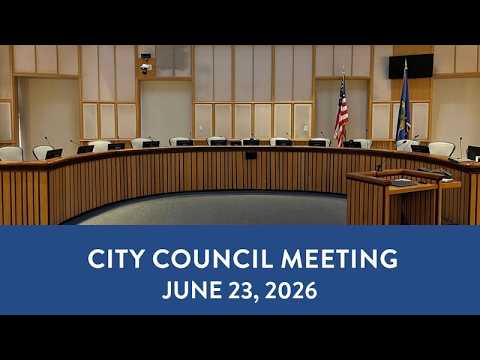
The Mountain View City Council unanimously adopted the city’s updated Biodiversity and Urban Forest Plan on June 23, 2026, endorsing a package of refinements staff said would strengthen implementation, monitoring and community engagement.
Assistant Community Services Director Brenda Sylvia and consultant staff from the San Francisco Estuary Institute presented changes to the draft that respond to council and public feedback. Key edits remove the ambiguous term "near native" from the native species category, add the concept of "biodiversity anchors," and substitute "functional species" for the former near‑native language to describe non‑regional species chosen for specific ecosystem functions such as climate resilience, pest resistance or urban compatibility.
Brenda Sylvia said the refinements are intended to support long‑term cross‑departmental coordination, adaptive management and annual reporting. The staff presentation also highlighted an implementation commitment: staff will pursue a CIP request to develop a web‑based tree‑selector tool to help planners, developers and residents choose appropriate species.
Scientists and community groups who took part in the public comment period welcomed the clarifications while urging a strong preference for regionally native plants where possible. "Native species remain critical to supporting the local food webs and native wildlife that have evolved here," said Ronit Bryant (commenting as a former elected official and long‑time conservation advocate). SFBI ecologist Sasha Heath clarified that "functional species" are those that provide similar ecological functions but are not regionally native.
Council members praised the collaborative process and the plan’s action‑oriented framework, including commitments to establish an implementation team, baseline metrics, and annual reporting to council and the public. The council also encouraged staff to pursue restoration actions such as daylighting creeks and integrating biodiversity goals into capital projects.
Next steps: staff will finalize remaining edits, pursue funding for the tree selector tool and begin implementation, including forming an implementation team and reporting annually on progress.