Get Full Government Meeting Transcripts, Videos, & Alerts Forever!
Get email alerts on the Jail Conditions topic
No spam. Unsubscribe anytime.
Oversight panel details water contamination, missing medical devices and inconsistent grievance access across Los Angeles County jails
Summary
At a May 7 oversight meeting, commissioners and community members said inspections showed discolored water and worms at CRDF, searches at Men—s Central Jail that allegedly removed inhalers and mobility aids, inconsistent access to grievance forms, and rushed security checks; the commission requested policy documents and data from the Sheriff—s Department.
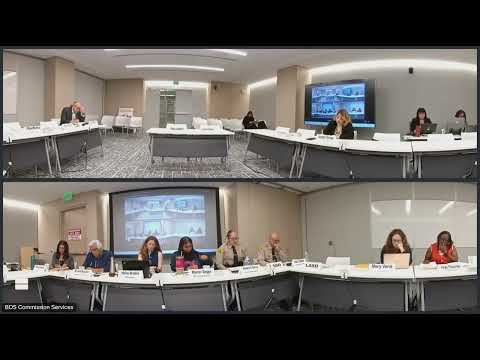
The Los Angeles County Civilian Oversight Commission for Institutional Inspections on May 7 reviewed inspection findings that commissioners and community members said point to systemic risks in county jails, including unaddressed water contamination, missing medical devices after searches and inconsistent access to grievance forms.
Commissioners opened the meeting by noting 17 in-custody deaths since January 2026, including six since their last meeting; the commission identified recent in-custody deaths on May 1, April 28, April 21, April 10, April 4 and April 2. The deaths framed the meeting as commissioners pressed department staff for clearer follow-up, documentation and policy detail.
Commissioner Pamela Thompson Bell and others pressed the sheriff—s representative, identified at the meeting as Commander Mento, about a March inspection of dorm 5900 at Men—s Central Jail. Multiple people who had been searched and moved to a roof for a search afterward reported that inhalers, canes and walkers were taken and not returned, the commissioners said. "We were told this module was all taken to the roof. The search was conducted. When they came back, walkers, canes, inhalers, all gone," a commissioner reported to the meeting. Commander Mento replied that prescribed medication is not removed unless it has been altered or otherwise meets contraband criteria and said the department would follow up with the facility and the watch commander.
Commissioners flagged a pattern across facilities of inconsistent access to inmate grievance and medical request forms. Inspectors reported dorms and housing units where grievance boxes were empty or where deputies told residents they must hand the form to a deputy rather than place it directly in a secure box. Staff said forms are briefed at shift start and are logged in EU dolls (the department—s internal logging system), but availability can vary because of facility layout and staffing. Commissioners requested that the department provide the number of grievances received per facility per week or month, if available from their reporting system.
Water-quality complaints at Century Regional Detention Facility (CRDF) were a second major focus. Commissioners and community members described discolored water and "worms" (small organisms) in drains and showers; inspectors said they sometimes observed water bottles were not distributed consistently across floors despite watch-commander assertions they had been. Facility staff told the commission a recent hot-water-tank repair led to discoloration when water was restored. Facilities planning has done site visits for filtration and identified electrical and plumbing buildouts needed to install certain filtration systems, but purchasing holds at the end of the fiscal year have delayed procurement. Staff said they are exploring alternative biodegradable products to treat pipes.
Inspectors also reported operational concerns inside multiple jails: routine "security checks" observers described as cursory (some reportedly taking under three minutes in high-observation dorms), deputies observed sleeping on post in at least one module, and inspectors reported triple-bunking in some units as housing is shifted to accommodate people classified as needing higher observation.
Several commissioners and public commenters urged clearer documentation and faster follow-up. Berkeley Donovan of ACLU SoCal, who addressed the commission in person, said the removal of mobility aids and the inconsistent availability of grievance forms demand a systemwide fix: "I often also see the boxes empty ... deputies to fill them up. I look forward to the vendor who will hopefully build that capacity," Donovan said during public comment.
The commission asked the sheriff—s department to provide several items in writing in advance of the next meeting (requested no later than May 28): the department—s general sanitation policy; the policy and expectations for use of proper pronouns; trustee eligibility/role requirements; guidance on when body-worn cameras must be activated; weekly grievance counts by facility (subject to the department—s reporting capabilities); and a formal follow-up on the 5900 search and the status of reportedly removed medical devices. Commissioners said they will document instances where the department does not provide the requested materials.
Why it matters: Inspectors and community members told the commission that these problems are not isolated. The group linked routine sanitation problems, delayed medical responses, and limited access to grievance mechanisms to elevated health risks and to the recent cluster of in-custody deaths. The commission framed its requests as part of oversight to prompt corrective action ahead of the next meeting.
What—s next: The commission will expect written responses and supporting materials from the sheriff—s department by the end of May. The department said a tablet-based grievance system is under contract negotiation and would require Board of Supervisors approval; the commission asked for a timeline once contract negotiations are complete.
Provenance: The account above draws directly on the commission—s May 7 meeting (topic introduced in SEG 054; discussion of grievance access and 5900 search from SEG 388 to SEG 509 and SEG 772 to SEG 883; CRDF water discussion from SEG 938 to SEG 1030).