Get Full Government Meeting Transcripts, Videos, & Alerts Forever!
Get email alerts on the Ag Economic Development topic
No spam. Unsubscribe anytime.
Committee backs agricultural branding campaign and presses for faster progress on worker housing
Summary
County staff presented a revised 2026 agricultural economic development work plan and a 'Heart of Santa Clara Valley' branding campaign backed by local partners and grants; supervisors pressed staff for faster interim steps and resource‑center options for agricultural worker housing while federal grants await disbursement.
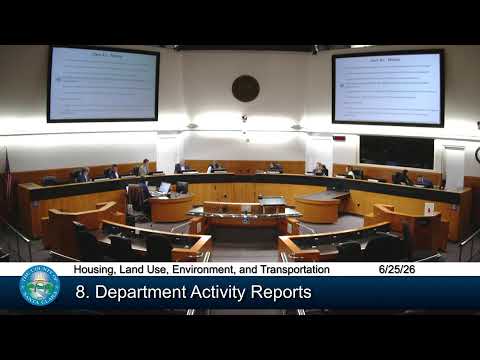
The committee on June 25 advanced a county agricultural economic development effort and branding campaign, and pressed staff to accelerate solutions for agricultural worker housing while federal grants remain slow to disburse.
Megan Kyle, economic development manager in the Office of the County Executive, described a revised 2026 work plan that prioritizes stakeholder engagement, easing regulatory navigation, business development supports and agritourism promotion. She said the county finalized an agreement with the U.C. Cooperative Extension for a $20,000 contribution to a branding and awareness campaign, and that a $200,000 Metropolitan Transportation Commission grant raised campaign fundraising to roughly $400,000.
"The campaign makes the link between the Valley of Hearts Delight and Silicon Valley," Kyle said, describing a campaign website, interactive map and original photography intended to promote local producers and agritourism.
Julie Morris, the county's agricultural liaison, said the campaign will use local photography and storytelling rather than stock or AI imagery. "It's authentic," she said, adding the website will include resources for visitors, buyers and people interested in agricultural careers.
The committee then shifted to agricultural worker housing. Staff described federal earmarked community project grants that are reimbursable and have long disbursement timelines; they said some awards may take about two years to translate into available funds. County officials outlined interim strategies—including lease consolidation of county facilities and temporary resource center options—to avoid waiting for full grant disbursement.
Vice President Arenas pressed staff for a more aggressive timeline and interim deliverables for agricultural worker housing, saying the county cannot wait multiple years to deliver concrete projects. Staff said they will price potential temporary solutions and return with a short‑term plan and a longer‑term path once grant reimbursement timelines are clearer. The committee approved the report by roll call.
The committee also asked staff to collaborate with district offices on outreach and to provide a fuller timeline for website and educational program rollouts in the next quarterly report.