Get Full Government Meeting Transcripts, Videos, & Alerts Forever!
Get email alerts on the Code Cleanup topic
No spam. Unsubscribe anytime.
Charlottesville launches 2026 zoning code cleanup; staff seeks technical fixes, not policy shifts
Summary
City staff outlined a March-to-March code-cleanup cycle focused on technical clarifications to Chapter 34, set a July 9 subcommittee meeting on build-to/setback and active-depth issues, and urged stakeholders to use the Connect Charlottesville page to track changes and submit comments.
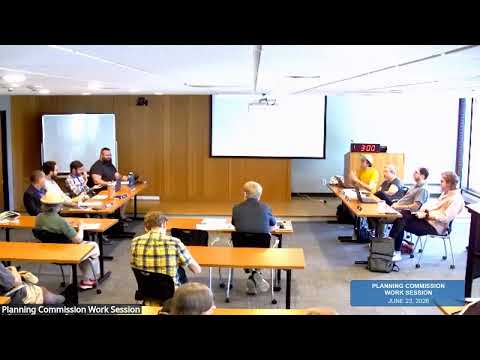
Charlottesville’s Planning Commission opened a public listening session to gather technical feedback for the 2026 zoning code cleanup, which staff described as a year-to-year effort focused on clarifications and minor refinements rather than major policy changes.
Matt Afflerbach, the city’s development planning manager, told attendees the 2026 cycle builds on an inaugural 2025 round that produced 83 amendments adopted in March. He said the commission aims to adopt changes on a March-to-March cadence and to post materials and a working log on the city’s Connect Charlottesville page so residents and professionals can follow the process.
Why it matters: The cleanup is intended to remove drafting errors, tidy cross-references, and make the development code more user-friendly and version-controlled, staff said. Afflerbach emphasized the technical focus: “this is the 2026 code cleanup cycle” and not a forum for finalizing large policy questions; larger policy items will be tracked to the long-range planning team’s work plan.
What staff will do next: Afflerbach said a subcommittee will meet July 9 to examine build-to/setback and active-depth issues and that staff will periodically freeze and post an updated working log on the Connect Charlottesville page. Beverly Dana (staff) said the city is capturing this session’s comments and encouraged stakeholders to follow and sign up on the Connect Charlottesville page.
Public input and process notes: The commission allowed three minutes per speaker and said staff would be permitted to respond after the public-comment period. Staff reiterated that applicants may choose a development-plan path (which vests zoning and is valid for five years) or go straight to a final site plan, but stressed the cleanup itself is focused on technical corrections rather than immediate policy revisions.
What’s next: Staff and commissioners said they will continue to collect feedback by email and through the Connect Charlottesville workspace, and long-range planning will track larger tier-three policy items for future work when a permanent NDS director is in place.