Get Full Government Meeting Transcripts, Videos, & Alerts Forever!
Get email alerts on the Parking Policy topic
No spam. Unsubscribe anytime.
Village manager urges tighter rules, higher fines and digital permits to curb overnight parking abuses
Summary
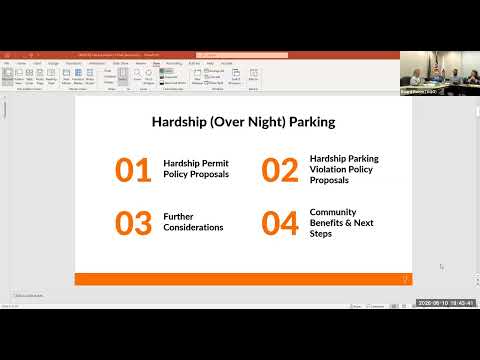
Village officials outlined proposals to tighten hardship (overnight) parking permits — including landlord verification, use of assessor property cards, limits tied to licensed drivers, higher fines and a shift to online, stickerless permits — with milestone reviews at two and six months.
The Village of Ossining presented a package of policy changes aimed at reducing misuse of overnight “hardship” parking permits and improving enforcement.
Village Manager (title as spoken) told trustees the effort is meant to preserve on‑street spaces for residents who built homes before off‑street parking was common and who legitimately qualify for hardship exemptions. The manager read the program’s eligibility standard aloud: “Any person who, being the owner or operator of a motor vehicle, has need to park within the Village of Ossining between the hours of 3:00 a.m. and 6:00 a.m. … for whom strict enforcement … would constitute an extreme hardship may apply to the village for a hardship exemption.”
Why it matters: staff said permit counts and enforcement data show growing pressure on curb parking. Staff noted 37,465 total summonses in the examined period and that about 53.5% of summonses are issued between 3:00–6:00 a.m., with 12,251 ‘‘no‑tag’’ violations recorded since January 2025. The manager said the village estimates roughly 2,000 off‑street equivalent spaces and fears further congestion if abuses are not checked.
Key proposals: trustees heard multiple measures intended to tighten eligibility and reduce fraud while keeping the program accessible: - Require property‑owner verification for applications, with the clerk’s office sending an online confirmation to the recorded owner; - Match permit requests to vehicle registration and require proof of each licensed driver at the address when multiple permits are requested; - Cross‑reference assessor property cards to confirm presence or absence of a driveway or garage; - Authorize targeted checks by parking enforcement officers (rather than broad code enforcement checks) when an application raises questions; - Increase fines proposed as deterrents: no‑tag from $50 to $150 and commercial‑vehicle fines from $100 to $250; raise the annual hardship permit fee from $90 to $125.
Enforcement and technology: staff and police representatives described moving the permitting process online, linking permit and summons records, and eventually adopting license‑plate readers that would allow drive‑through enforcement and a stickerless, digital permit. The police representative said the goal is to reach an enforcement saturation point that deters repeat noncompliance.
Court handling and chronic offenders: the village prosecutor said long‑running cases of repeated violators are handled in court with prosecutorial discretion (payment plans, partial resolution, or in some cases impoundment); several examples of individuals with dozens or hundreds of open tickets were cited as reasons to preserve strong remedies for scofflaws.
Next steps: staff recommended the board finalize policy language and implement the online application and guardrails, then review results after two and six months. Fee changes and capital investments (such as plate readers) were described as budget items that would come back to the board for authorization.
The board did not take a formal vote during the discussion; trustees signaled support for moving forward with the recommendations while asking for clear timelines, broader public outreach and sensitivity to low‑income residents when fines or fees are increased.