Get Full Government Meeting Transcripts, Videos, & Alerts Forever!
Get email alerts on the Cannabis Regulation topic
No spam. Unsubscribe anytime.
Blackduck council adopts cannabis ordinance amendment after heated public hearing
Summary
After a packed public hearing featuring strong opposition over wastewater and safety, the Blackduck City Council approved amendments to its cannabis ordinance (Ordinance 2025-04) on a 4–1 roll-call vote, reducing some buffer requirements and allowing indoor cultivation under county registration rules.
The Blackduck City Council approved an amendment to the city's cannabis business ordinance (Ordinance 2025-04) after a lengthy public hearing that drew dozens of speakers worried about wastewater, safety and the proximity of a proposed cultivation facility to an early childhood center.
Supporters of tighter regulation and residents who said they live near the site urged the council to block or tighten rules, citing infrastructure and public-safety concerns. Former city public works director Bob Cluke Jr. warned that cultivation operations can produce wastewater high in phosphorus and other nutrients that could overwhelm Blackduck's aging lagoon system, "leading to regulatory violations, costly upgrades or fines" that would fall on taxpayers, he said.
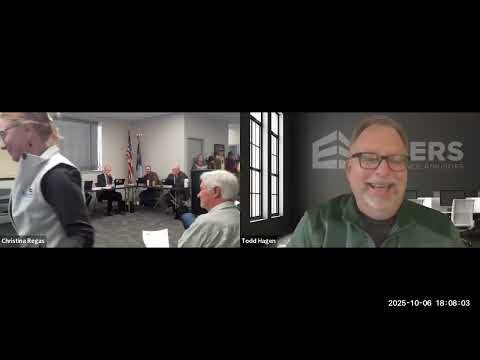
Councilmembers said they empathized with residents but noted the city's limited authority under state law. Christina (city staff) read the ordinance in full and cited the statutory framework governing local regulation; several councilmembers said attempting to prohibit an otherwise state-compliant cannabis business could expose the city to legal challenges. After discussion the council took a roll-call vote and approved the ordinance 4–1.
The ordinance as adopted keeps detailed registration and compliance language, delegates retail registration to Beltrami County and maintains civil penalties; it also specifies buffer distances in multiple places (for example, the ordinance text as read set 200 feet as the minimum distance for a cannabis retail business from a school and 500 feet from a daycare for retail; the text allows reduced buffers for cultivation and other non-retail business types in some instances).
During public comment residents raised three recurring concerns: (1) wastewater and environmental impacts to the municipal lagoon system; (2) potential changes to community safety and crime; and (3) whether promised jobs and wages would materialize. Bob Cluke Jr. said the city's lagoon was not designed for industrial nutrient loads and urged the council to require strict pre-treatment, nutrient limits and ongoing monitoring. "If this operation increases phosphorus loads beyond what the lagoons can handle, the city could face not only state regulatory violations, costly upgrades, or fines," he said.
Company representatives on a Zoom line, identified in the transcript as Alan and a colleague, replied that the proposed facility uses drip irrigation with capture systems, maintains a separate holding tank for any process water, and employs ultraviolet and other treatment steps when needed. Alan said the firm tracks product rigorously, maintains extensive security and camera systems, and expects to hire locally; he said lowest-paid roles would start at about $16 per hour and that many technical positions would pay more. "We have a separate holding tank ... and our water coming in has to be treated very, very well," he told the council.
Council members pressed both sides on practical points. Some said they did not like cannabis personally but were constrained by state statute and case law; others said they wanted firm documentation and conditions if the company moved forward. Christina said staff would follow the ordinance's procedural steps, including county registration and required filings with the Office of the State Auditor where applicable.
What the ordinance means in practice: the adopted language preserves county registration and compliance checks, limits hours of retail sales where applicable, and keeps civil-penalty provisions; it also retains the city's ability to operate one municipal retail outlet under the chapter. The council did not adopt any additional site-specific conditions on the record beyond the ordinance text.
The council recorded the final vote as 4 in favor and 1 opposed. The ordinance will be filed according to city procedures and the county will continue to administer retail registration and compliance checks under the statute cited in the ordinance.
The next procedural step will be standard administrative filings and any separate permit or registration review at the county level; council members asked staff to provide documentation residents requested about wastewater handling and security measures if and when a state-licensed operator submits an application.