Get Full Government Meeting Transcripts, Videos, & Alerts Forever!
Get email alerts on the Utilities topic
No spam. Unsubscribe anytime.
Resident tells council late bills exposed her address, questions $50 smart‑meter charges and opt‑out costs
Summary
An unnamed resident told the Mount Vernon City Council her utility bill was mailed to a non‑existent address and arrived without an envelope exposing her home address. She said she paid the previous bill in full but was charged two $50 items and urged the city to consider less frequent reads or a medical exemption process for smart‑meter opt‑outs.
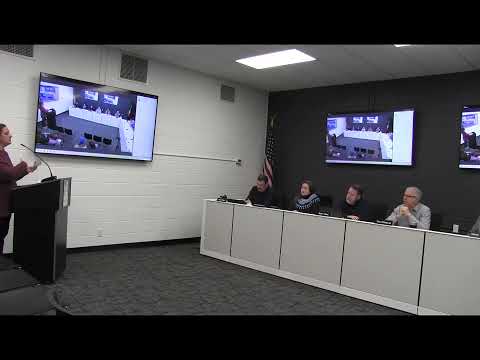
A resident addressing the Mount Vernon City Council during public comment said she recently received a city utility bill that had been sent to a non‑existent address and lacked an envelope, exposing her physical address.
The resident said she had paid the prior month’s bill in full but the new bill lists a $50 “PB” (which she interpreted as previous balance) and another $50 listed under the code “MS.” “If I’m being charged $50 for the last month, even though I paid the bill in full, and $50 more, those two items are about the same amount as my total bill,” she said, calling the charges “ridiculous.”
She told council members she had opted out of smart meters through Alliant Energy and that the utility company had installed non‑transmitting meters at her home. “My health has been improving. I’m not as dizzy. I don’t have so many headaches,” she said, adding that some critics might call it a placebo but that she feels better.
The resident told council that she had been charged by Alliant less than $7 a month to opt out of smart meters elsewhere, and asked whether the city could reduce the frequency of in‑person meter reads instead of sending staff monthly to read the meter. “Would it be possible to read it maybe once a season or at least every other month?” she asked, explaining her household averages roughly $100 a month in utility bills.
She also suggested a medical‑exemption form signed by a physician—used in some other jurisdictions—to document health reasons for limiting exposure to transmitting meters. “I would just like to see if the city would be willing to consider something like that,” she said, and asked staff (naming Lori and Chris) to review the billing and the mailing error.
City staff acknowledged the request and invited the resident to follow up at city hall to resolve the address and billing questions.
The council did not take immediate action during the meeting but staff were asked to look into the mailing error and the unexplained charges.
What happens next: the resident was advised to stop by city hall to pay the bill and review the account; staff will investigate the mailing error and the two listed charges.