Get Full Government Meeting Transcripts, Videos, & Alerts Forever!
Get email alerts on the Public Safety topic
No spam. Unsubscribe anytime.
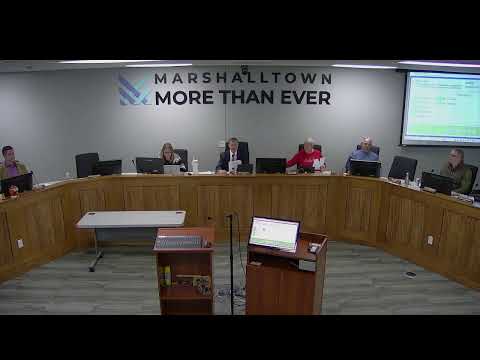
Marshalltown council approves expanded Flock Safety camera network and allocates local sales-tax funds
Summary
The council voted to use council-designated local option sales tax revenue to cover the first year of an expanded Flock Safety camera system and authorized a two-year contract with Flock Safety for license-plate and live-view cameras, after debate about fund sustainability and public safety benefits.
The Marshalltown City Council on Dec. 22 approved funding and a contract to expand the city’s Flock Safety camera network, saying the cameras aid investigations while some council members and members of the public warned about budget implications.
Chief of Police Chris Jones told the council the two-year contract with Flock Safety would cost $190,000 per year, plus first-year installation expenses, and would extend license-plate-reader coverage and add live-view and tilt-zoom cameras at key intersections and corridors. Jones said the system has helped investigators contradict false alibis and speed identification of suspects, citing recent arrests and a hit-and-run prosecution that involved the cameras.
Councilors voted to allocate one year of council-designated local option sales tax (LOST) revenues to cover the initial costs. Diana Steiner, the city’s finance director, described the current projected fund balance and said the city receives local-option sales-tax revenue monthly through June; she and other staff said the one-year allocation was feasible but future years depend on revenue, transfers to the general fund, and other budget commitments.
Several councilors pressed for clarity on sustainability. Councilor Nicholls voted no on the LOST allocation and again voted no on the Flock contract, citing concerns about using sales-tax reserves while the city projects negative balances in some snapshots of AT (automated traffic) revenue. Councilor Mitchell also recorded a no vote on the Flock contract.
Public commenters split between safety and fiscal caution. Penny Hartwell urged the council to prioritize officer safety and keep the cameras, while Linda Clark and other residents said the city should avoid speculative spending when some fund balances look strained.
Chief Jones said the proposed expansion would replace aging Crimes Stoppers cameras and add coverage at intersections that have seen traffic fatalities and serious crashes (examples cited included Iowa Avenue at Sixth Street and Main Street at Third Avenue). He described a contract termination clause negotiated with Flock Safety that would allow the city to end the agreement if legal or regulatory changes made the system unlawful.
Under the terms described to council, Flock Safety would own installed equipment; if the city terminated service the vendor would be responsible for removing equipment. Staff said the city can phase installation or add cameras later, but the current proposal aimed to achieve even coverage across town.
The council approved both the LOST allocation and the contract. The vote on the contract recorded Councilors Schneider, Thompson, Bonka, Kell and Lyhoff as yes; Councilors Mitchell and Nicholls voted no. The LOST-allocation motion also carried with a recorded no from Councilor Nicholls during that separate roll call.
What’s next: The police department will proceed under the authorized contract and coordinate installation and any live-view camera placements; staff and councilors indicated they will continue monitoring fund balances and future budget impacts.