Get Full Government Meeting Transcripts, Videos, & Alerts Forever!
Get email alerts on the Rail Quiet Zone topic
No spam. Unsubscribe anytime.
Resident urges Mount Vernon to explore nighttime train 'quiet zone'
Summary
Alex Perjatko, a Country Club Drive resident, asked the council to study establishing a nighttime quiet zone to reduce disruptive train whistles; staff said prior local projects cut noise but Iowa DOT control of Highway 1 could limit options and the process can take years and significant funding.
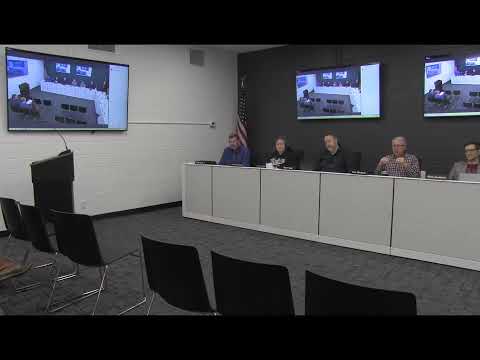
Alex Perjatko, who identified himself to the council as a resident of Country Club Drive, asked the Mount Vernon City Council to explore creation of a nighttime "quiet zone" for trains that frequently sound whistles near homes. "We've lived here now for about 3 years ... we'll often get woken up ... 1:00 to 4:00 in the morning, just from the whistle of the train," Perjatko said, citing Hiawatha and Cedar Rapids as nearby examples of communities that have pursued similar measures.
Perjatko outlined the typical infrastructure changes required to qualify for a federal or state quiet zone, saying towns often install medians or four‑quadrant gates to prevent motorists or pedestrians from bypassing crossing gates. "What it would potentially take ... is you have to ensure there's no real feasible way or easy way for people to bypass the guards that are already currently in place," he said, and suggested that Iowa DOT coordination could be part of any effort.
City staff responded that Mount Vernon has experience with quiet‑zone work. A staff member described the city's prior Springville Road project and warned that some roads (notably Highway 1) are under Iowa DOT control, which can limit what the city can do unilaterally. "When we did the quiet zone on Springville Road ... they were already down not a chance," the staff member said, noting the DOT's authority to approve or deny modifications adjacent to state highways. Staff also recounted that the Springville Road quiet‑zone effort took permitting, multiple engineering reviews and roughly two years from start to finish, and that the city previously spent approximately $150,000 to implement that project.
Council members and residents at the meeting emphasized both the quality‑of‑life and safety considerations: staff said whistle‑reduction significantly decreased nighttime noise for some neighborhoods but cautioned that the DOT must sign off on changes that affect state highways. Staff also noted that the city might volunteer local funding to help a DOT review and that any formal quiet‑zone application would include engineering work, potential medians or gate modifications, and a permitting timeline.
The council did not take a vote on a quiet‑zone ordinance during the meeting. Staff invited the resident to follow up so the city could assess feasibility and potential costs in coordination with the Iowa DOT.