Get Full Government Meeting Transcripts, Videos, & Alerts Forever!
Get email alerts on the Intergovernmental Services topic
No spam. Unsubscribe anytime.
Township and Paynesville representatives agree to rewrite salt-and-sand and equipment‑sharing language, continue current billing short term
Summary
Officials agreed to draft a new agreement to replace inconsistent 2010 terms for the shared salt-and-sand shed and equipment; they will continue current per‑load billing and use weight tickets for transparency while staff calculate a recommended rate.
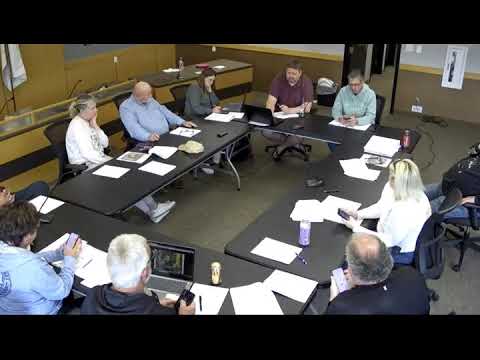
Township and Paynesville representatives agreed at a joint meeting to draft updated language for their decades‑old salt‑and‑sand and equipment‑sharing agreement after participants said routine billing had drifted from the contract’s terms.
The change matters because the existing agreement, still written in the 2010 form, describes a $1,500 annual storage charge plus splitting purchases, while the parties have been charging per load in practice. A township representative said the written agreement "says that we pay $1,500 a year plus anytime you guys make a purchase of salt or sand, we split it," and that recent practice has instead billed the city "by the load." City representatives confirmed they had been billed per load and said the municipality weighs trucks and tracks tonnage for payments.
Members discussed measurement and transparency: the township typically counts yards while the city measures tons by truck weight, and participants agreed weight tickets or scanned receipts should be attached to invoices so both sides can verify usage. Attendees cited current informal pricing of about $100 a yard (roughly a ton) and debated whether to embed a flat rate, a cost‑plus formula, or a per‑load price in the revised agreement.
No formal vote was taken. Instead, participants agreed that staff would draft revised language that clarifies (1) whether the $1,500 storage fee remains or is replaced by per‑load billing, (2) whether measurement is set as tons or yards with conversion language, and (3) how tickets/weight receipts will be shared with invoicing. In the interim, the bodies agreed to continue the current practice of billing per load split between entities until the new agreement is circulated.
The meeting also reviewed shared equipment provisions. Officials confirmed the chipper and other tools are covered under the shared‑maintenance clause; the chipper is roughly 20 years old but in service, with planned replacement language in the agreement for 2026. Participants asked staff to prepare a spreadsheet of last year’s hours and costs so a data‑driven rate for trail work and equipment use can be proposed next season.
Next steps: Clark (staff) agreed to draft revised agreement language and circulate cost data on sand, salt and mowing rates before the next meeting.