Get Full Government Meeting Transcripts, Videos, & Alerts Forever!
Get email alerts on the Homelessness Counts Enforcement topic
No spam. Unsubscribe anytime.
Vista PIT rises while county falls; council debate centers on enforcement and counting methods
Summary
Vista recorded 290 people in the 2026 point‑in‑time count (157 unsheltered, 133 sheltered), an increase for the city even as San Diego County reported an overall 1% decline. Council members and the mayor sharply debated whether counting methods, volunteer deployment and lack of jail access are masking or worsening homelessness in Vista.
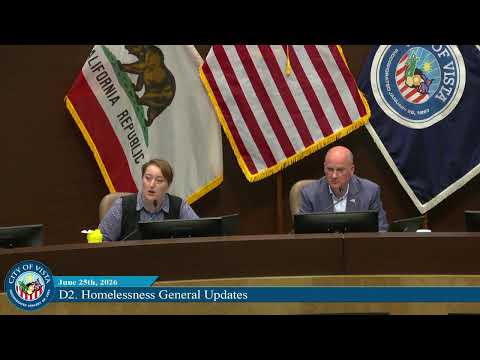
The City of Vista'standing committee on homelessness heard a review of the 2026 point‑in‑time (PIT) count and a vigorous debate over enforcement and data reliability.
Jonathan, a city housing staffer, told the committee the 2026 PIT found 290 people experiencing homelessness in Vista: 157 unsheltered and 133 sheltered. He explained the city uses three complementary measures—HUD's PIT, the HMIS client database ("Clarity") and a continuously updated by‑name list maintained by the San Diego Rescue Mission—and cautioned they serve different planning purposes. Jonathan said the by‑name list showed about 390 unsheltered Vista clients during the month because it tracks people engaged with services over a 90‑day window rather than a single night.
The numbers prompted questions from committee members about comparability year‑to‑year. Staff noted a change in "deployment sites" (where volunteer teams assemble) after San Marcos began operating its own site rather than deploying from Vista; that shift, combined with volunteer staffing levels, can affect how many census tracts are covered on a single PIT night.
Mayor [no last name given] pressed a different point: he argued Vista's investments in shelters and services must be paired with stronger enforcement tools and jail access to compel participation in treatment. "If you're not saying that jail has to be an alternative to refusal to accept treatment, do not vote for them again," the mayor said, arguing that many misdemeanor citations never result in booking or court follow‑through and therefore provide no consequence to repeat offenders.
Deputies from the city's COPS team described practical limits they face: felony and certain violent misdemeanors remain bookable, but many nonviolent misdemeanors (including some possession and low‑level battery charges) are not bookable under current county/state policy. Deputies said encampment counts are down anecdotally while contacts with habitual individuals are up, and they emphasized the value of multiagency biweekly walks (San Diego Rescue Mission, community improvement teams, deputies and county social workers) to clear and monitor encampments.
Several council members urged the committee to treat the PIT as a public, media‑facing snapshot while relying on the by‑name list for operational planning and case management. Staff agreed to provide more detail about volunteer rosters and deployment sites so the committee can assess whether operational changes affected the PIT result.
The committee did not take formal action at the meeting. Staff said enforcement and jail‑access questions will be raised with county partners and scheduled for further leadership‑level briefings at upcoming meetings.