Get Full Government Meeting Transcripts, Videos, & Alerts Forever!
Get email alerts on the Urban Trees topic
No spam. Unsubscribe anytime.
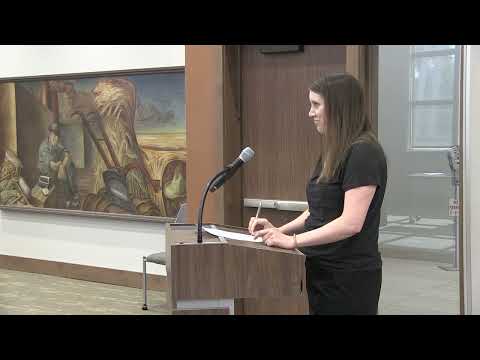
Tree board member Alyssa Wagner says Nebraska Street plantings may violate city ordinances
Summary
Alyssa Wagner, a member of Algona’s tree board, told the City Council on June 15 that trees planted in the Nebraska Street project breach city spacing and sightline rules and that Emerald Ash Borer removals have lagged; city staff said it will review placements and noted contractor warranty and bidding rules.
Alyssa Wagner, a member of Algona’s tree board, told the City Council on June 15 that many of the trees planted as part of the Nebraska Street project were not installed in accordance with city planting standards and warned the placements could damage curbs, sidewalks and nearby buildings.
Wagner said she reviewed the new plantings and found numerous spacing and clearance problems—trees placed 6–7 feet from street lights and stop signs where the ordinance requires 25 linear feet or the mature-tree spread, and trees in parking islands narrower than the city’s 10-foot minimum. She also said the contractor sourced plants from Wood Duck Farms in Iowa City rather than the five local vendors listed as approved, and that watering and post-installation care did not appear to be organized. “I found at least half of the tree plantings to be in violation of at least one ordinance,” Wagner told the council.
The city acknowledged the concern and said staff will review the plantings against the ordinance and follow up with the private design team and contractor. City staff noted that under Iowa public-bidding rules, the city cannot require a contractor to buy materials from specific local nurseries; the contractor carries a one-year warranty for plant replacements and is responsible for watering during that warranty period. The city also said it will pursue hazardous ash-tree removals through planned budget amendments and bidding, prioritizing trees that present an imminent hazard.
Wagner also pressed the council on the city’s response to Emerald Ash Borer. She said a multi-year removal plan had been identified earlier, but that this year she had seen little progress and observed many partially or completely dead ash trees in neighborhoods. City staff said the original plan was intended to run eight to 10 years, that the borer had proved more aggressive than expected, and that staff intends to include removal funding in the next budget cycle with the goal of completing as much work as possible by the end of 2027 and finishing by 2028.
Why it matters: Incorrect tree placements can cause infrastructure damage and long-term maintenance costs; delayed ash removals raise immediate safety and property concerns. Wagner urged the council to clarify the tree board’s role in large projects and demanded greater adherence to planting standards.
What happens next: City staff said they will review the Nebraska Street plantings for ordinance compliance, confirm contractor responsibilities under the one-year warranty, and pursue budget language and bids to accelerate ash removals. The council subsequently reappointed Wagner to the tree board later in the meeting.
Quote: “I found at least half of the tree plantings to be in violation of at least one ordinance,” Alyssa Wagner said.