Get Full Government Meeting Transcripts, Videos, & Alerts Forever!
Get email alerts on the Probation Services topic
No spam. Unsubscribe anytime.
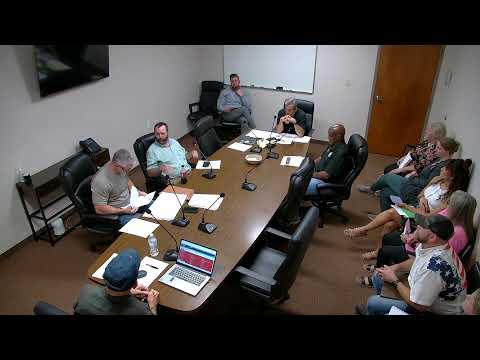
Coffee County approves $21,000 for probation services to support clients with drug-related needs
Summary
The Coffee County Opioid Abatement Committee approved a $21,000 disbursement to the county probation department to buy hygiene supplies, workbooks, six iPads and training for staff; the committee stressed documentation and audit-ready reporting before releasing funds.
The Coffee County Opioid Abatement Committee approved a $21,000 disbursement on a probation department application to support probation clients with drug-related needs.
Ms. Linda Baker, director of Coffee County Probation Services, asked the committee to fund hygiene bags, cognitive-behavioral workbooks, two women’s self‑esteem groups, six iPads and staff attendance at an Rx/opioid summit. "We're requesting 21,000," Baker said, noting the itemized total came to $20,132.76 and the additional amount was to cover possible inflation. She described frequent homelessness among clients and linked the proposed supports to drug-related harms: "Someone that is homeless, it's usually because of drugs," Baker said.
Chairman Judge Robert Carter and other committee members said the request has a clear Coffee County nexus because the probation office serves the county court caseload. Carter urged Baker to provide documentation tying each expenditure to program outcomes and to prepare for an anticipated audit: "We need to be able to say that when you came to us, this was your plan of how you were going to use these to affect our drug issues in the county," he said.
Baker provided line-item figures in the committee packet: $400 for 20 hygiene bags (about $20 each); $1,100 for 100 cognitive-behavioral workbooks (about $11 each); $3,000 for six iPads priced at $500 apiece; and an estimated $20,132.76 total including conference registration, lodging and travel for eight staff. She told the committee the iPads would be used for court-related work, remote client contacts and to access language-line services in the field.
Members asked for simple audit-ready records — sign-in sheets, invoices and counts of how many clients benefited — so the board can show a spending trail to the state. Accounts staff member Janet, who helped calculate per‑diem meal rates, confirmed those figures were included in Baker's packet.
The motion to approve the disbursement was made and passed by voice vote; the audio transcript records two committee members saying "I" in favor. The committee did not identify a mover or seconder on the recorded audio. The minutes will record the formal roll call and the budget office will process the payment according to county procedures.
The committee emphasized this approval does not relax documentation requirements: members said they expect Baker to submit invoices and usage statistics to the budget director to ensure the county can account for the money in any future audit. The committee scheduled follow‑up review of paperwork as needed.