Get Full Government Meeting Transcripts, Videos, & Alerts Forever!
Get email alerts on the Land Use topic
No spam. Unsubscribe anytime.
Rutherford County planning commission to draft conservation-subdivision rules after extended discussion
Summary
After a multi-hour discussion about clustered "conservation" subdivision design, the Rutherford County Regional Planning Commission voted to hold a staff-led work session to develop optional conservation-subdivision regulations and consider changes to neighborhood-meeting requirements ahead of zoning-ordinance amendments.
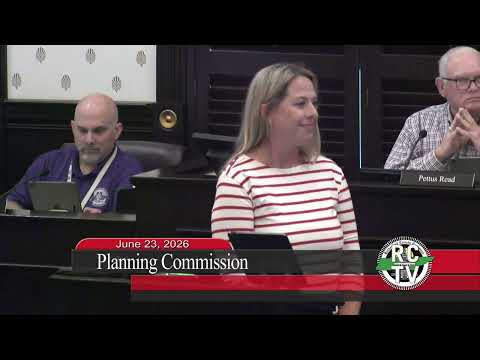
The Rutherford County Regional Planning Commission voted June 23 to convene a work session to develop optional regulations for conservation-style subdivisions that cluster homes and preserve open space, after staff presented example designs and commissioners debated feasibility, market demand and legal limits.
Staff planner Mr. Damasi told commissioners the example handout showed how a developer could yield the same number of lots while reducing road length and preserving more open space. "This is kind of what we're looking at as far as starting to develop some regulations for conservation design subdivisions," he said, stressing the materials were illustrative and not yet ordinance language.
Commissioners agreed the approach could protect wooded tracts and reduce infrastructure costs, but they raised practical concerns. Commissioner Jeff Phillips and others recounted recent developments that became rental-heavy and asked whether the county can restrict future rental conversions. County counsel Nick responded that current local authority is limited: "As of right now I don't think there's anything we can put in place" to cap rentals without changes at the state level, he said, and suggested lobbying the state legislature for new authority.
Technical feasibility also drew scrutiny. Staff and engineers warned that streams, rock outcroppings and drainage easements commonly reduce developable acreage and can complicate attempts to shrink lot sizes. Commissioners noted ARAP and other permitting timelines for waterway impacts could add 30–90 days to project schedules.
Several commissioners said the rules should be optional and predictable so developers have clear rules rather than ad hoc approvals. Commissioner Michael Shirley said conservation designs could preserve the county's rural character while still allowing development: "If it's made in such a way that people can buy homes and move in there," Shirley said, "that's in the long-term best interest of Rutherford County."
The commission voted to hold a work session after the July day meeting to draft potential ordinance language, discuss lot-size thresholds, open-space protections, maintenance responsibilities for preserved land and neighborhood-meeting protocols, and to solicit input from builders and local developers. Staff said a full ordinance amendment would later require public hearings before the planning commission and the county commission, and that changes prompted by a recent state public chapter would need to be folded into the schedule if applicable.
Next steps: staff will prepare materials and suggested topics for the work session and notify commissioners of timing; a formal zoning-ordinance amendment would still require public hearings and county-commission approval.