Get Full Government Meeting Transcripts, Videos, & Alerts Forever!
Get email alerts on the Infrastructure And Services topic
No spam. Unsubscribe anytime.
Board forwards Buffalo Springs sewer exception application after neighbor raises water and safety concerns
Summary
The board approved submitting an exception application to the Sarpy County Sewerage Agency for Buffalo Springs re‑plat one (applicant Jared Weed), while neighbors raised concerns about well yields, fire protection and agricultural preservation; staff and county attorney said the sewerage agency will make the exception decision.
On June 23 the Sarpy County Board approved a growth management plan exception application (resolution 175) to the Sarpy County Sewerage Agency for Buffalo Springs re‑plat one, a proposal from Jared Weed for 16 three‑acre lots to be served by onsite septic and subject to a per‑lot sewer agency fee of $6,000.
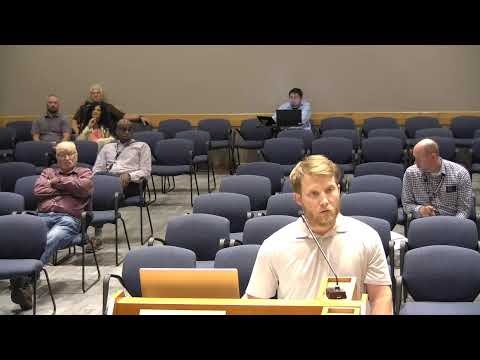
John Map, who identified himself and spoke at length during public comment, urged the county to protect existing agricultural land and long‑time residents, and raised detailed concerns about groundwater availability, well drawdown, fire protection and whether the proposed lots belong amid active farmland. He said some existing wells in the area produce only a few gallons per minute and described an earlier fire where water supplies became a limiting factor for firefighting.
Planning staff and Deputy County Attorney Nicole Spitznogle clarified the board's role: the county, as the zoning jurisdiction, must apply to the sewerage agency on the applicant's behalf, but the agency—not the board—decides on exceptions. Staff said developers typically perform well exploration and that by final plat stage a full exploration would be required; in this case the board was voting only to forward the application.
Commissioners debated long‑term growth management, conservation set‑asides and developer responsibilities. Scott Bullock said the county requires a build‑through acreage development to set aside 60% of the acreage that cannot be developed until sewer is available; developers must also pay the per‑lot fee. After discussion the board voted to approve submitting the exception application to the sewerage agency.
The next procedural step is the sewerage agency's review; if it approves the exception the developer may return to the county for final plat and subdivision agreement work. If the agency denies the exception the developer will need to revise the plat.