Get Full Government Meeting Transcripts, Videos, & Alerts Forever!
Get email alerts on the Governance And Process topic
No spam. Unsubscribe anytime.
Nowthen city attorney, planner give training on land-use law, open meetings and findings
Summary
City Attorney Bob Ruby and Planner Cindy Nash presented a comprehensive training to the planning commission and city council on quasi-judicial conduct, the 60-day statutory timeline, open-meeting limits, due process in public hearings, and best practices for findings of fact and record-keeping in land-use decisions.
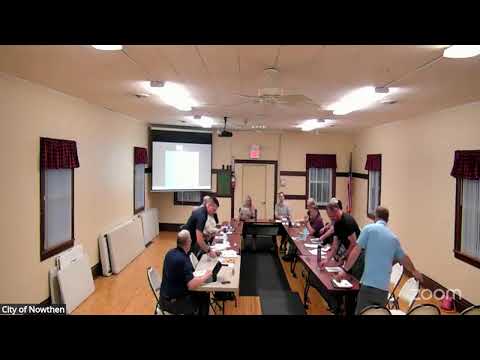
City Attorney Bob Ruby and Planner Cindy Nash delivered an extended training to the Nowthen Planning Commission and members of the City Council on legal and procedural responsibilities tied to land-use decision-making.
Ruby emphasized the quasi-judicial nature of planning and zoning decisions and warned commissioners and council members that displaying bias or advocacy before a matter is fully heard can lead a court to remand a decision or exclude a member from participation. He illustrated the point with past cases and told officials they must “remain completely neutral” until the public hearing record is closed and all facts are before the body.
Staff also reviewed the statutory timelines that govern certain zoning approvals, referencing the 60-day rule (noted in the presentation as ‘1599’), the 15-day completeness check, and the options for written extensions; presenters stressed calendaring deadlines to avoid automatic approval outcomes. They covered open meeting law constraints—including text and email threads that can create serial-quorum violations, un-noticed site visits, and the potential for personal fines and attorney-fee exposure—and urged consistent public-hearing procedures such as time limits applied equally.
On record-keeping, Ruby and Nash urged contemporaneous, written findings of fact that explicitly apply the ordinance standards to the facts in the record, noting that a complete administrative record (minutes, findings, exhibits, audio/video) increases the likelihood a judge will defer to a local decision rather than allow record supplementation during litigation.
The training addressed variances, conditional use permits and interim use permits, developer agreements and letters of credit, and the practical differences between preliminary and final plats. Staff recommended drafting findings in advance when possible, documenting exhibits as part of the record, and using conditions carefully because conditions attached to approvals are difficult to change later without the owner’s consent.
Quotes
"You cannot advocate for a position, pro or con, while this matter is before you; you have to remain completely neutral," City Attorney Bob Ruby told commissioners about quasi-judicial conduct.
"If you have a good record, the judge is going to give you great deference," Ruby said when explaining the importance of findings and a complete administrative record.
Ending
Ruby and Nash closed by inviting questions and encouraging staff and elected officials to continue tightening procedures where appropriate—such as by limiting returns of routine final plats to the planning commission when no material changes exist—and by emphasizing that careful records and consistent procedures are the best defense against litigation.