Get Full Government Meeting Transcripts, Videos, & Alerts Forever!
Get email alerts on the Farm Bill topic
No spam. Unsubscribe anytime.
Lawmaker unveils Agriculture Act of 2026 as "Farm Bill 2.0" to bolster rural economy
Summary
A Senate lawmaker released a discussion draft called the Agriculture Act of 2026, or "Farm Bill 2.0," proposing expanded commodity supports, higher USDA loan limits, broader disaster assistance, investments in rural infrastructure and research, and bipartisan provisions to reach a 60-vote threshold in the Senate.
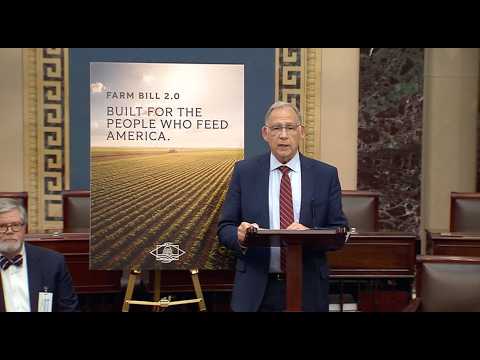
A Senate lawmaker on the floor released the Agriculture Act of 2026, a discussion draft described as "Farm Bill 2.0" intended to update federal farm policy and shore up rural economies.
"Today, I'm proud to release the Agriculture Act of 2026, a discussion draft of Farm Bill 2.0 that is built for the people who feed America," the lawmaker said, framing the proposal as a response to widespread economic stress in farm country.
The draft, the lawmaker said, packages changes to commodity programs and crop insurance, raises reference prices, expands access to disaster assistance for drought, predation and other losses, and increases USDA loan limits so producers can access capital. "The working families tax cut enhances commodity programs, expands access to more affordable crop insurance, and makes those tools more responsive to real-world risk," the lawmaker said.
Beyond direct farm supports, the bill includes investments the sponsor described as aimed at strengthening rural quality of life: safe drinking water, expanded broadband, medical care and affordable child care. The lawmaker also called for stepped-up agriculture research funding and support for 1890 land-grant institutions to improve competitiveness and workforce development.
The sponsor cast the draft as bipartisan and built to attract broad support, noting that it "incorporates more than 100,000 bipartisan marker bills and priorities" and referenced the House effort led by House Agriculture Committee Chairman GT Thompson. The lawmaker also warned of national-security concerns tied to agriculture inputs, saying the draft takes steps to respond to a spike in fertilizer costs and "strengthen our defenses against foreign adversaries taking advantage of our agriculture industry."
No formal motion or vote was recorded in the remarks. The lawmaker acknowledged the Senate's procedural requirement that most major legislation must secure 60 votes to pass and urged colleagues to work across the aisle. "This legislation must receive 60 votes in the Senate," the lawmaker said, adding that the draft is intended as a foundation to build bipartisan agreement.
At the conclusion of the remarks the speaker thanked Senator Klobuchar, committee members and staff for their work on the draft and yielded the floor. The remarks did not announce a specific committee markup, floor schedule or timeline for a vote.