Get Full Government Meeting Transcripts, Videos, & Alerts Forever!
Get email alerts on the Cdbg Allocation topic
No spam. Unsubscribe anytime.
Residents urge Gettysburg to target CDBG funds to emergency shelter and Hopkins House restoration
Summary
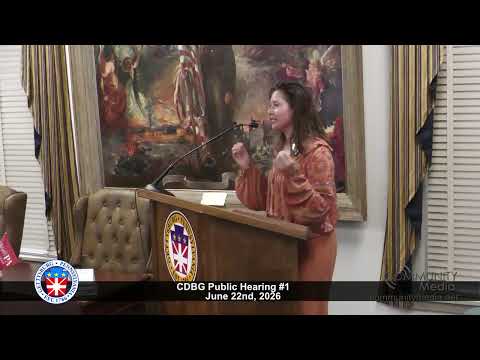
At a June 22 public hearing, residents and nonprofit representatives urged the Borough Council to use Community Development Block Grant funds for emergency shelter operations, year-round housing supports and restoration of the Hopkins House as part of a Black history trail and neighborhood revitalization.
Gettysburg residents told the Borough Council on June 22 that limited CDBG dollars should be used to shore up emergency shelter capacity and restore the Hopkins House to support low- and moderate-income residents.
Nancy Kramer, a volunteer with CARES (Community Area Resources for Emergency Shelters), said CARES operates a low-barrier winter shelter and is renovating a building to provide next-step housing. "Our goal is to not have anyone freeze to death over the winter," Kramer said, asking the council to consider CARES for CDBG assistance to support shelter operations and services.
Allison Lintel, a resident who also testified at the county hearing, cited regional data she said were drawn from HUD’s point-in-time counts and county reports: "In Adams County in 2025 during this one-night count, there were 33 households who were unhoused and that included 49 persons," Lintel said, and she told council members that about 90% of shelter clients served were county residents. Lintel urged the borough to consider year-round shelter and other housing options as a public-safety priority.
Mary Smith, representing Hopkins House and Gettysburg History, asked council to consider Hopkins House restoration as a CDBG-eligible mix of housing rehabilitation, historic preservation and economic development. Smith said restoring Hopkins House and nearby historic properties could broaden tourism beyond military history and create commercial benefits for hotels and restaurants in the borough.
Alana Anderson, outreach coordinator at SCAP, said direct-service organizations in town — including CARES and the Rescue Mission — are central to a local continuum of care and urged council to invest in them. Anderson also offered a recorded case study of a blight-revitalization project in Sharon, Pa., as an example for staff review.
John Whitmore, borough staff who briefed the hearing about program mechanics, described CDBG as a stable but slowly declining federal resource and said the borough’s FY2026 allocation was in the range of roughly $127,000 to $130,000. Whitmore said those funds have historically supported ADA curb-ramp projects and that the borough administers CDBG through Adams County, which requires detailed plans and documentation. He also warned that competitive grant opportunities require fully prepared applications and noted a White House draft budget that proposed eliminating CDBG altogether.
Why it matters: CDBG funds are among the main federal tools municipalities use for housing-related infrastructure and social services for low- and moderate-income residents. Council members heard several specific local requests tied to both immediate shelter needs and longer-term preservation and economic development goals.
What’s next: Council twice announced a follow-up public hearing on CDBG allocation for July 27, 2026, at 6:30 p.m. The borough will collect public input at that hearing and staff said they will continue to work with Adams County on program administration.