Get Full Government Meeting Transcripts, Videos, & Alerts Forever!
Get email alerts on the Road Classification topic
No spam. Unsubscribe anytime.
Livingston Parish committee advances road-classification criteria to guide bond spending and corridor planning
Summary
Committee members reviewed a draft road-classification criteria manual intended to feed a parishwide master transportation plan, set a 30–45 day target for initial classifications, and discussed prioritizing preservation and corridors (including 449-to-Blackmud and Burgess Expressway) to guide use of the $60M bond funds.
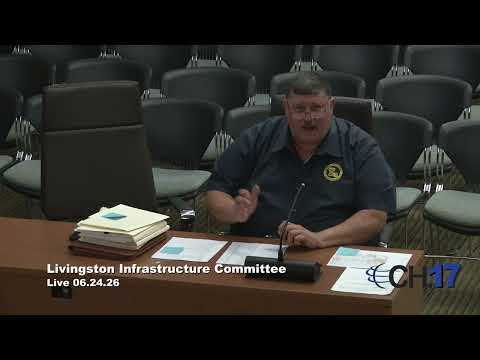
Mr. Dugas, a parish staff member, told the Livingston Parish Infrastructure Committee that the draft road-classification criteria will form a first step in a parishwide master transportation plan and help the parish prioritize limited capital dollars.
"Ultimately, this... will be part of a parish-wide master transportation plan," Mr. Dugas said, describing two maps he gave the committee: the DOTD functional system and a parish local-roads map showing the black-lined roads under review. He said the manual will let staff classify roads that currently meet collector standards in practice but are not included in the state functional system, which affects eligibility for state and federal funds.
Why it matters: Committee members said classifying roads will let the parish target preservation work and bond money where it benefits the most people, rather than only treating pavement condition scores equally. Mr. Dugas said the method used for the 2025 bond weighted classification to favor roads that move traffic, not just those with poor pavement scores.
Committee members also discussed design and connectivity standards that could be embedded in the manual, including required connections in long dead-end subdivisions, setbacks, and traffic-calming measures such as chicanes and roundabouts. "If we require on the development them to leave... every so many feet you have to leave a 60-ft servitude... for connecting properties," Mr. Dugas said, describing proposed connectivity language.
Timeline and deliverables: Mr. Dugas told the committee he aims to finish the initial classifications in 30–45 days and to have the criteria manual drafted by spring. He emphasized that none of the classifications take effect until the parish council approves them and that the planning department will be responsible for enforcing standards once the council adopts the manual and UDC language. The committee agreed to hold monthly infrastructure meetings for updates.
Corridor and project planning: The committee flagged major capacity projects to be incorporated into a future-major-street plan, including a 449-to-Blackmud Road extension and the Burgess Expressway alignment. Presenters described staging strategies: produce 30% full-buildout plans that can be scaled to an initial two-lane construction while preserving right-of-way for future widening. The group instructed staff to coordinate a budget meeting with the parish budget officer to develop a 3–5 year funding plan prior to sending materials to council.
What remains open: The committee did not adopt final classifications at the meeting. Mr. Dugas and staff will circulate a draft criteria manual and maps, meet with the budget office about 30% cost estimates and a multi-year budget, and return with an update at the next infrastructure meeting. The council must formally adopt any criteria and classifications to make them effective.