Get Full Government Meeting Transcripts, Videos, & Alerts Forever!
Get email alerts on the Government Ethics topic
No spam. Unsubscribe anytime.
Council adopts ordinance to raise member pay; public raises transparency concerns
Summary
The council voted to adopt Ordinance 26‑13 increasing council compensation for the next term and amended a timing typo; public commenters warned the ordinance’s automatic adjustment language would let future legislative changes increase pay without renewed public notice, prompting council discussion and an amendment before adoption.
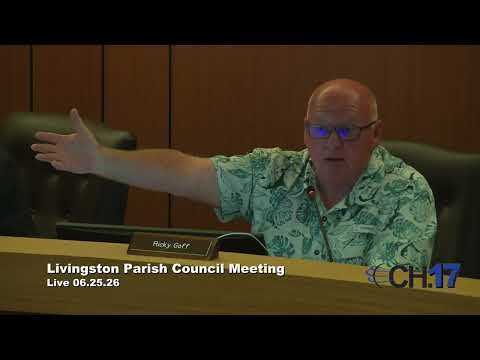
The Livingston Parish Council on June 25 adopted Ordinance 26‑13 to increase council member compensation for the next elected term, after a heated public hearing that focused on a provision tying future adjustments to state legislative changes.
Adrien Bordalon, a member of the public who presented comparative parish pay data, told the council he supported a raise to the state maximum but objected to language that would automatically apply future state increases without returning to the parish or notifying voters. "I think that is wrong... you will automatically get a 24, you know, you will move from the 1,600 to the 2400 and nobody in this parish will know it," Bordalon said, arguing that changes should come back to the public for review.
Council members debated the home‑rule charter’s restrictions and how any state change would interact with the parish schedule. Supporters said the language was intended to align future council pay with the state and to apply only to future terms; opponents sought a narrower formula or removal of automatic adjustments. The council amended the ordinance to correct an effective‑date typo (2027→2028) and proceeded to adopt the ordinance as amended.
Why it matters: The ordinance affects compensation for future officeholders and drew public concerns about transparency and automatic indexing to state law. Council members emphasized that pay increases do not apply to current officeholders mid‑term under the home‑rule charter but said aligning with state maximums can help recruit candidates.
What’s next: The ordinance takes effect for the next official term (amended to 2028); council staff said they will circulate clearer language if further edits are requested during the ordinance committee review.