Get Full Government Meeting Transcripts, Videos, & Alerts Forever!
Get email alerts on the Water Quality topic
No spam. Unsubscribe anytime.
Residents press Mulberry leaders over boil-water notice and communications
Summary
Residents raised alarms about a recent boil-water notice, questioned whether chlorine-monitoring alarms or power/server issues caused the precautionary notice, and criticized the city’s outreach; commissioners and staff defended their response and said lab samples were under way.
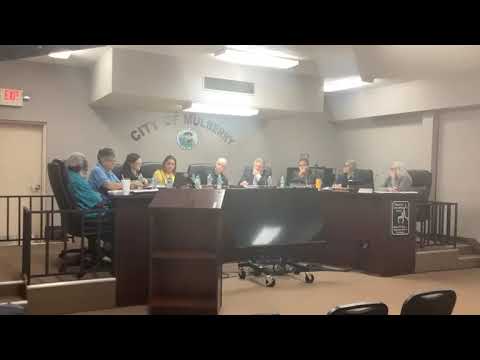
Several residents told the Mulberry City Commission they were alarmed by a recent precautionary boil-water notice and by how the city communicated the event.
Public commenter Reverend James Michael Davis recalled long family ties to Mulberry and urged the commission to investigate the water incident, saying the community needed assurance “this was not being taken lightly.” Resident Adam Davis — who posted videos about the incident that he said reached tens of thousands of viewers — criticized what he described as conflicting explanations from staff (he cited social-media posts that attributed the issue to a power outage while a staff member told him it could have been a power surge or a server outage). Adam Davis told the commission he had asked for supporting documents, SCADA logs and chlorine-purchase records to substantiate the official account.
Commissioner Divine and other commissioners defended staff and thanked employees who stayed at the water plant overnight to address the problem. The commission said the monitoring alarm that tracks chlorine levels failed to alert staff when levels dropped below required thresholds; the first set of lab samples had been sent to a lab on the day of the meeting and a second set planned for the next day, and staff said the precautionary boil notice would be lifted only after both lab reports indicated safe levels.
Becky Shulman, a resident and county official, urged patience with small utilities and praised the city’s use of county services for reverse-911 notification and other outreach. At least one commissioner said he had requested records and SCADA data to clarify the technical cause and to ensure transparency.
The commission did not adopt new policy at the meeting; commissioners asked staff to provide the requested documentation and confirmed that public-safety protocols (flushing hydrants, lab sampling, and notification) had been followed as the immediate response.