Get Full Government Meeting Transcripts, Videos, & Alerts Forever!
Get email alerts on the Zoning Text Amendment topic
No spam. Unsubscribe anytime.
Enfield panel approves narrow text change to allow on‑site fleet maintenance in I1 industrial zone
Summary
The Enfield Planning & Zoning Commission approved a text amendment to permit fleet maintenance as an accessory use in the I1 industrial zone with strict limits — including bans on EV battery removal, body work and outdoor storage — and set the amendment to take effect July 13, 2026.
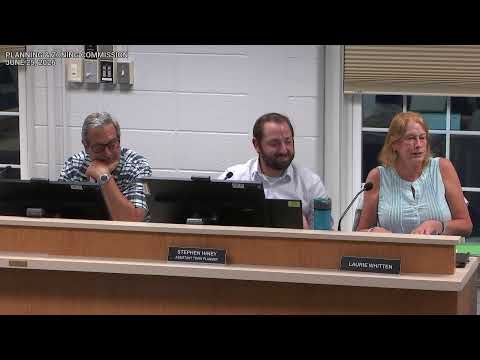
The Enfield Planning & Zoning Commission on June 25 approved a zoning text amendment to let companies perform limited fleet maintenance inside buildings in the town’s I1 industrial zone, with specific prohibitions designed to limit environmental and safety risks.
Valerie Pharaoh, president of Goodear Advisors, presented the proposal on behalf of the applicant and said the draft language was crafted to allow only company‑owned fleet maintenance as an accessory use. “I was kind of stunned because I saw that it was allowed in more restrictive zones,” Pharaoh said, describing the effort to tailor language that would allow maintenance while preventing third‑party or public repairs.
Under the amendment adopted by motion, motor‑vehicle repair in the I1 zone is restricted to accessory fleet maintenance only; removal, repair or storage of EV batteries is prohibited; body work is prohibited; and outdoor storage is prohibited. The commission’s motion also found the change consistent with the town’s Plan of Conservation and Development and noted a positive referral from CRCOG received June 17.
Commissioners debated several details before voting. Commissioner Linda Deg Gray pushed to align the local wording with state statutes and to add an explicit prohibition on third‑party work so that the use would be limited to the on‑site owner’s fleet. Other members raised operational questions such as whether medium‑ or heavy‑duty tractor‑trailers should be allowed; some commissioners said those details are better addressed at site‑plan review when an applicant’s operations and mitigation measures are known.
A member of the public, Lorie Parker of 105 Cottage Road, urged caution in siting repair uses near wetlands, asking that any nearby operations include safeguards for fluid and chemical runoff. Planning staff responded that wetlands rules and normal disposal requirements would apply, and that site‑specific reviews could trigger additional permitting.
Planning staff said the amendment could reduce trips to off‑site maintenance and support local economic activity at warehouse and distribution sites. The motion specifies the amendment will be published June 27, 2026, and become effective July 13, 2026. The commission voted by roll call; the record shows Ken Holinsky, Christian De Antonio, Linda Deg Gray, Frank Alimo, Joe Mule, Terrence Lynch and Laura Ray Anderson voting in favor.
Because the change is a text amendment rather than a site plan, any specific facility seeking to use the new allowance must later submit the usual site‑plan materials where hours, noise control, EV charging infrastructure and other operational safeguards can be required. The commission noted that enforcement of state requirements and site‑plan conditions will be the primary means to limit noise, outdoor storage and safety risks.
The commission closed the public hearing and adopted the amendment at the meeting. Applicants that later submit site plans under the new allowance will be subject to standard plan review and any conditions the commission or staff deem necessary.