Get Full Government Meeting Transcripts, Videos, & Alerts Forever!
Get email alerts on the Transportation topic
No spam. Unsubscribe anytime.
Public input favors roundabout but divides council on Cascade Bridge intersection options
Summary
Public-works staff told council that the public survey on the Cascade Bridge project and adjacent intersection showed the roundabout option had the most support but also the most opposition; staff emphasized 4(f)/NEPA constraints, reuse of bridge materials, and the need to coordinate with SHPO before finalizing design and budget.
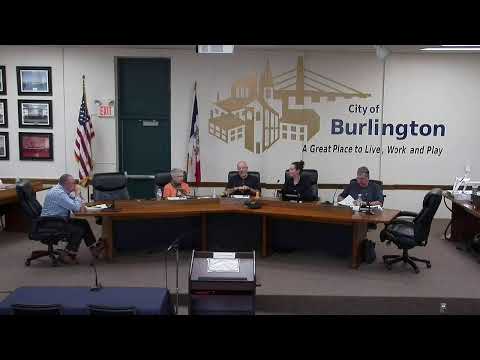
At the April 27 Burlington City Council work session, public-works staff presented results from a recent public survey and community meeting about the Cascade Bridge replacement and the adjacent intersection. The survey informed three conceptual intersection options; the roundabout drew the most support overall but was also the most polarizing among respondents.
Mr. McGregor, Public Works deputy city manager, said the project team used AI tools to compile large public-response files and that staff wanted to surface the public’s rationale for concerns before moving to plans-and-specifications. He stressed several technical constraints that shaped the outreach: the roadway has not been updated in 25 years, traffic-flow and safety concerns prompted the review, and the project must address 4(f) and NEPA considerations because park property and a nationally significant historic structure (the Cascade Bridge) are involved.
Council discussion touched on reuse and preservation: some members encouraged preserving bridge elements for public display if feasible but sought realistic cost and maintenance estimates. One council member objected to proposed tower structures, warning they could invite climbing and require fencing and ongoing maintenance. Staff said decisions about preservation and reuse should be made before demolition to ensure pieces remain available and to factor preservation costs into the budget and the memorandum of agreement with the State Historic Preservation Office (SHPO).
Staff said an additional public meeting is scheduled in June and suggested a smaller preparatory meeting with council to refine focus areas before that session. They asked council to help narrow the concept selection so architects could show refined drawings illustrating how preserved elements could integrate with the intersection concept.
Next steps: staff will schedule follow-up briefings, coordinate with SHPO on a memorandum of agreement, and return with refined design concepts and cost estimates for council review and public input.