Get Full Government Meeting Transcripts, Videos, & Alerts Forever!
Get email alerts on the Library Funding topic
No spam. Unsubscribe anytime.
Library staff warns new Iowa property-tax law will limit local library funding
Summary
Britney Jacobs of the Burlington Public Library told the council that Senate File 2472, passed in the final hours of the 91st General Assembly, consolidates local levies and will constrain how the Burlington Public Library is funded, narrowing a previously voter-approved library levy option.
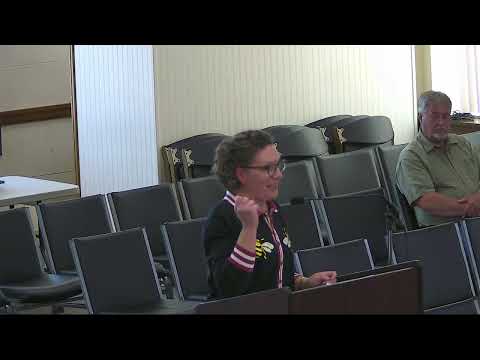
Britney Jacobs, speaking for the Burlington Public Library, told the City Council that recent changes at the Iowa Legislature could shrink local libraries'funding options and raise fresh questions about intellectual freedom in public institutions. "Every citizen has a right to seek and receive information from all points of view without restriction," Jacobs said as she framed the library'role in an "America 250" context.
Jacobs reviewed local library history and the 91st General Assembly process: she said nearly 1,000 bills were introduced this session, about 151 were enacted, and nine were library-specific. Several of those measures did not advance past early "funnel" deadlines, and a later effort to incorporate multiple library provisions into a city Board of Health bill was amended but did not pass before lawmakers adjourned.
She highlighted Senate File 2472, passed on May 3 in the final hours of the session, as the measure most likely to affect Burlington. Jacobs said the measure consolidates local levies into a consolidated general fund levy and described how that change removes the separately voted library levy mechanism the city previously used. In remarks to the council she cited a hard cap reference discussed during the session and noted that staff are still parsing the bill's language and its implementation implications.
City staff later explained how the property-tax changes function operationally: the new law includes a 2% cap on revenue growth for the combined general-fund levies and changes to how some property classes are treated (for example, multi-family properties were moved back into their own class and may see valuation increases under the new schedule). Staff warned the city will rely on administrative rule-making this summer and fall for implementation details that determine local fiscal impacts.
Jacobs encouraged residents to remain engaged as the city, local library leaders and state representatives examine how the law will affect services: she offered to provide the council a longer presentation on intellectual freedom and legislative developments and to meet with council members and local legislators.
Next steps: staff said they will continue to analyze the bill's text and administrative guidance and will bring more detailed estimates to upcoming budget and policy sessions as the city refines revenue and expenditure forecasts.