Get Full Government Meeting Transcripts, Videos, & Alerts Forever!
Get email alerts on the Data Center Moratorium topic
No spam. Unsubscribe anytime.
Cascade council adopts 12‑month moratorium on data‑center construction
Summary
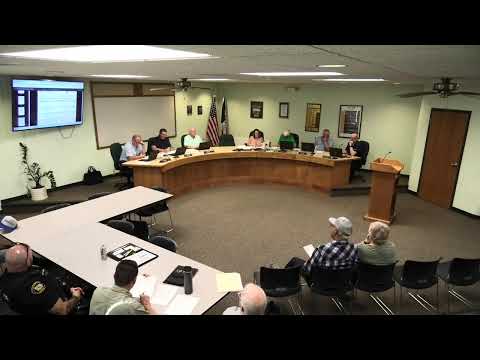
After sustained public comment that raised concerns about water, electricity, noise and transparency, Cascade City Council approved Resolution 57‑26 on June 22, 2026 to impose a 12‑month moratorium on new data‑center construction while the city develops regulations and holds public meetings.
Cascade City Council voted to impose a 12‑month moratorium on new data‑center construction inside the city limits on June 22, 2026, citing resident concerns about infrastructure, noise and transparency.
The council approved Resolution 57‑26 after sustained public comment from neighborhood residents and an exchange with the Cascade Economic Development Corporation. The motion to adopt the 12‑month moratorium was made by Councilmember Delaney and seconded by Hush; the resolution passed by recorded roll call.
"I respectfully request that the city of Cascade follow the lead of Debuke County and place a 12‑month moratorium on all new data‑center‑centered development within the city," said Alice Rogers, a resident of the Oak Hill subdivision and organizer of the Concerned Citizens of Cascade. Rogers told the council her group has grown to nearly 200 members since May and wants time for ordinance drafting, impact studies and public meetings.
Residents who spoke during the public‑comment period raised a set of recurring concerns: potential increases in local power bills, large water demands depending on cooling systems, and noise from fan arrays. Daniel White cited a local news account that reported a 24% increase in electric bills near a large data center in Aurora and urged a one‑mile buffer between data centers and homes, schools or churches.
"There are a lot of questions and I feel that it is important for Cascade to have answers so that our community can all feel at ease with the decisions that are made," said Gina Hemer, who described herself as a member of a local community forum on the issue.
Ken McDerman, president of the Cascade Economic Development Corporation, told the council the CEDC first learned of the project's scope change to a data center in early May, invited the owner's representative to a CEDC meeting, and disputed public allegations that CEDC members were personally benefiting. McDerman said the CEDC has been told the facility would use a closed‑loop water system, and that the local electric cooperative indicated the project should not harm existing users and could produce revenue to help hold rates down.
Council discussion focused on length and oversight of the pause. The city attorney advised that 90 days is the minimum moratorium length in state guidance; councilmembers argued for more time to adopt benchmarks. The adopted Resolution 57‑26 sets a 12‑month moratorium and provides for periodic reviews so the council can rescind it early if ordinances or guidance are adopted.
The council did not adopt new technical limits (for example, specific decibel thresholds or a one‑mile buffer) as part of the resolution; rather, members asked staff to draft standards and return with proposed benchmarks and a public‑engagement schedule.
The moratorium is procedural: it temporarily stops acceptance or final action on development applications for data centers so the city can develop review standards and hold community meetings. The council said it will schedule interim updates so residents can monitor progress.