Get Full Government Meeting Transcripts, Videos, & Alerts Forever!
Get email alerts on the Water Conservation topic
No spam. Unsubscribe anytime.
City staff say Moab is near state water goal but urge steps to cut residential use; council tasks staff to draft code changes
Summary
At a June 23 workshop, city staff told the Moab City Council they are close to meeting the state's five-year water conservation goal but residential use rose this year; staff proposed a menu of near-term steps including education, targeted audits, rate changes and the option to trigger mandatory Stage 3 restrictions in July. Council asked staff to prepare code language and expand outreach.
City staff presented the draft five-year Water Conservation Plan to the Moab City Council on June 23 and told members the city is close to meeting the state's 20% reduction target, but recent hot, dry weather has raised residential water use.
Val, a city water planner, told the council the state measures gallons per capita per day (GPCD) and the regional target moves from 333 to 267 GPCD. "We have to submit a draft on July 15th," she said, and noted the city has reduced its GPCD since 2020 but still sees spikes during dry periods. Val showed sector breakdowns for 2025 with residential accounting for roughly 55% of local water use and commercial about 37%.
Why it matters: residential accounts drive the city—s overall GPCD, so small changes in household irrigation or plumbing efficiency have an outsized effect on the city's compliance with state requirements and eligibility for water-development funding. The city must file a draft plan in mid-July, host a required public hearing in October, and submit a final plan by year-end.
Key near-term measures presented included continued social-media and face-to-face outreach with hotels and restaurants, targeted internal audits of city irrigation accounts, and two policy paths to strengthen the city's response to drought: (1) rely on existing code to move from voluntary advisories to mandatory Stage 3 restrictions when triggers occur or the council declares a shortage, or (2) adopt a standalone code change that would make some measures mandatory in the summer independent of an emergency declaration.
Staff also outlined longer-term strategies such as adjusting the tiered rate structure to incentivize lower consumption, offering local matches for state programs like "flip your strip," and exploring larger investments such as wastewater-plant retrofits for centralized greywater reuse.
Council response and next steps
Council members welcomed more education and targeted enforcement. Members repeatedly emphasized a phased approach that foregrounds outreach and training over immediate punitive measures, while also recognizing the need to clarify enforcement mechanics. City staff explained that, under the Water Shortage Response Plan, mandatory violations would be enforced by a graduated fine structure (warnings and monetary penalties escalating by shortage stage).
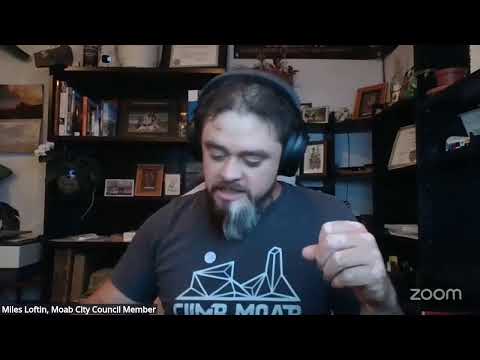
Miles, speaking from Zoom, urged the council to "inform people for a little while and then codify" changes where practical, and asked staff to provide clearer, quantifiable guidance for measures that are hard for residents to judge (for example, what it means to "reduce misting by 15%" for a residential mister).
Council direction: staff to prepare code language and increase outreach
After discussion, the council asked staff to prepare code adjustments addressing straightforward measures (hours for watering, lodging laundry practices and related definitions) and to return to the council at the end of July with options to move into Stage 3 ("orange") if supply and demand trends warrant. Staff said they could begin stepped-up education and targeted enforcement immediately without waiting for a formal code amendment.
What remains unclear
Staff noted several data gaps to refine the plan, such as the exact drivers of a 2024 institutional-use bump and more granular irrigation vs. culinary-water accounting for some small farms. Staff committed to follow-up analysis, including separating city park and golf-course use and coordinating with the city's supply monitor to provide regular trend reports to council.
The council asked staff to bring code language and a clear communications plan for the July meeting so members can decide whether to trigger mandatory restrictions for this summer.