Get Full Government Meeting Transcripts, Videos, & Alerts Forever!
Get email alerts on the Animal Control topic
No spam. Unsubscribe anytime.
Council advances rewrite of animal code; debate highlights microchipping, insurance for 'vicious' animals
Summary
At first reading of a rewritten chapter of city animal ordinances, Marshalltown council heard public concerns about restrictive language and insurance requirements while the Animal Rescue League urged mandatory microchipping and offered vouchers to reduce costs.
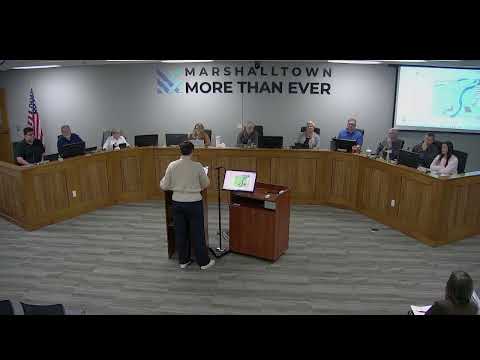
Marshalltown City Council held the first reading of Ordinance 15114 on March 9, a proposed repeal and replacement of Chapter 90 (animals), and heard extended public comment on enforcement, insurance requirements for owners of animals designated as "vicious," and microchipping provisions.
Members of the public criticized some draft provisions as overly restrictive and questioned enforcement capacity. "I would like all pets to have forever homes, but there are so many restrictions and I am starting to have a problem with a lot of the stuff because what good is all of these ordinances if they're not being enforced?" Linda Clark told the council.
Insurance concerns were raised by Lee Botter, an insurance professional, who recommended adding surety-bond language to the ordinance because some carriers will not underwrite animals labeled "vicious." "If a carrier knows in advance this is a vicious animal, it is highly unlikely the owner will be able to obtain coverage via homeowner's policy," Botter said, urging the city attorney to consider certificate-of-insurance or surety-bond alternatives.
Austin Gillis, executive director of the Animal Rescue League of Marshalltown, demonstrated microchipping and presented data showing microchipped animals are returned to owners far more often than unchipped animals (he cited reunification rates rising from about 22% to over 52% for dogs and from under 2% to nearly 38% for cats with microchips). Gillis said microchipping reduces shelter and police burdens and that his organization will provide vouchers to make microchips affordable for low-income families.
Council members directed staff to continue refining the ordinance language and to return with formal ordinance drafts; a roll-call recorded support for advancing ordinance-related actions recorded earlier in the agenda (Mitchell voted no; the majority voted yes). The item will return for subsequent readings and possible amendment based on council direction and attorney review.
What happens next: staff and the city attorney will review suggested changes (insurance language, enforcement provisions and microchipping implementation), and the council will consider revised ordinance text in a future meeting.