Get Full Government Meeting Transcripts, Videos, & Alerts Forever!
Get email alerts on the Transportation Station Design topic
No spam. Unsubscribe anytime.
Exeter to host public design session on future train station after decades-long ebb and partial return
Summary
A town history program tracing Exeter's river hub, railroad era, and the 1967 end of passenger service announced a public design session at Lincoln Street School on Friday, August 7 for residents to weigh in on plans for a future train station.
Exeter will host a public design session at Lincoln Street School on Friday, August 7 to gather input on what a future train station could look and feel like, organizers announced in a narrated town history program that traced the facility’s rise, decline and partial return.
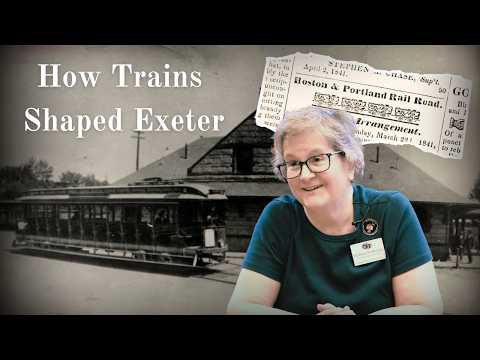
The program placed the station in local context: Exeter’s original center of activity grew up along the tidal Squamscott River, where ships once carried lumber and goods; the arrival of the railroad in 1840 shifted industry and transport inland, and Lincoln Street Depot (opened 1867, destroyed by fire in 1890) and the 1892 replacement building served as gateways to town. “The train station changed everything,” the program said.
Why it matters: The session gives residents an opportunity to help shape a public-facing piece of infrastructure that many in town remember as central to community life. Passenger rail service ended in Exeter in 1967 as car ownership and road-based travel rose, but advocates worked for years to restore service. In December 2001, passenger trains began stopping again from a newly constructed platform adjacent to the former station, for the first time in 34 years.
Local advocate Bob Hall, identified in the program as a Seacoast train advocate, recounted his involvement in regional restoration efforts dating to about 1989, when he said he read about meetings to restore Boston–Portland passenger service and decided to join because of his long familiarity with the tracks and whistles in town. “I know the tracks in town. I’ve all my life heard the whistles blowing,” Hall said.
The program reviewed how successive transportation technologies reshaped Exeter’s built environment: river transport and mills clustered on Water Street in early years; the railroad later drew industry westward; streetcars expanded affordable day trips to Hampton Beach, and early 20th-century autos eventually made private driving dominant. That shift in travel patterns helped push commercial activity toward Portsmouth Avenue, where larger parking lots supported supermarkets and car-oriented retail.
Organizers said the design session will solicit residents’ preferences for a welcoming, community-centered station. For more information about the public design session, the program directs residents to the town’s website at exeternh.gov.
The program did not announce funding sources, an implementation timeline, or specific design proposals; those details were described as topics for the upcoming public session. The town’s website is listed as the source for additional event information.