Get Full Government Meeting Transcripts, Videos, & Alerts Forever!
Get email alerts on the Stormwater Retrofit topic
No spam. Unsubscribe anytime.
Belrammy Soil & Water presents stormwater retrofit plan to address Blackduck Lake phosphorus
Summary
Belrammy Soil & Water told the Blackduck City Council that a proposed retention pond and other best-management practices could remove roughly 17 pounds of total phosphorus annually from a local subwatershed, helping the town toward a 5% phosphorus reduction goal; funding options and maintenance responsibilities were discussed.
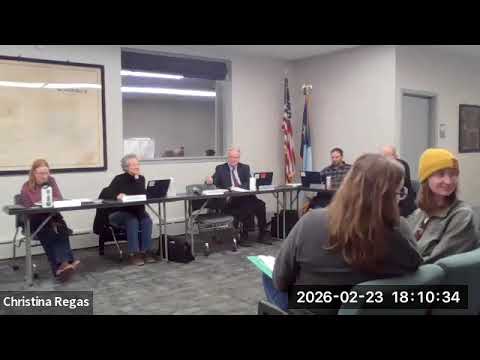
Belrammy Soil & Water Conservation District representatives presented a stormwater retrofit analysis to the Blackduck City Council, focusing on measures to reduce nutrients and suspended solids entering Black Duck Lake.
Kaylee, a clean-water specialist with the conservation district, told the council that Black Duck Lake “is impaired specifically for mercury and, I believe, phosphorus,” and that the retrofit report recommends several options including manhole baffles, forbay features and — most prominently — a retention pond located near the city park. She said the retention pond is expected to remove about 17.3 pounds of total phosphorus per year from the modeled subwatershed, a material contribution toward the town’s 5% phosphorus-reduction target.
The presenters explained that retention ponds capture both sediment and dissolved nutrients by providing settling area and vegetated buffers, while baffles installed in manholes are targeted more at removing sediment. They noted the recommendation for a pond stemmed in part from local clay soils that limit infiltration, making an infiltration basin less feasible.
On financing, presenters said Clean Water Legacy funds under the one-watershed-one-plan for the Upper/Lower Red Lake watershed can cover construction costs — potentially up to 100% depending on timing and policy-committee approval — while the city would typically be responsible for annual maintenance. Council members asked about maintenance frequency and costs; staff and presenters cited rough annual maintenance estimates near $6,500 and noted dredging or more intensive maintenance would be occasional (the report cites dredging cycles around five years).
Presenters described the next steps: the council would sign a written expression of interest, the project would go to steering- and policy-level partners for prioritization, and the district would work to align construction with other capital projects where possible. Kaylee left contact information for follow-up and asked the council to review cost estimates before making a commitment.
Council members said they are open to pursuing the project but need more precise engineering and cost numbers before agreeing to participate or accept a funding match. The presenters emphasized that urban stormwater is only one piece of a broader watershed strategy that also includes shoreland practices and agricultural measures.