Get Full Government Meeting Transcripts, Videos, & Alerts Forever!
Get email alerts on the Municipal Finance topic
No spam. Unsubscribe anytime.
Auditor: Franklin Springs receives clean audit but officials warned on staffing and water fund loss
Summary
Auditor Justin Burus told the Franklin Springs City Council the city received an unmodified (clean) 2025 opinion; he flagged a small net-position decrease, one-year land-purchase distortion to reserves, segregation-of-duties risks, and a water fund operating loss that may prompt future rate changes.
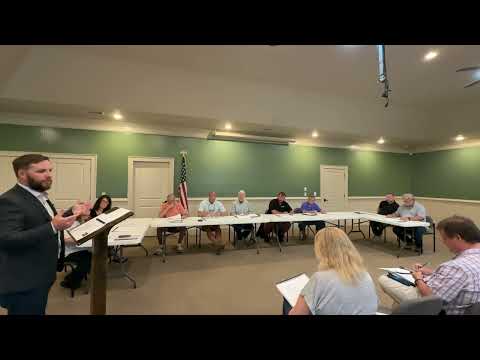
Justin Burus, an auditor with Rush, told the Franklin Springs City Council the city’s 2025 financial statements received an unmodified (clean) opinion and reviewed results across governmentwide, general fund and utility fund statements.
Burus said the city’s governmentwide net position declined about $29,000 in 2025 to roughly $3.2 million. He pointed out that a large land purchase skewed single‑year general‑fund results: the audit shows about $888,000 in general‑fund revenues and roughly $2.1 million in expenditures for the year, leaving $465,000 in unrestricted fund balance. That reserve equals roughly 2.7 months of operating expenditures; Burus said backing out the single land purchase would push the reserve toward a healthier five to six months.
The auditor also reviewed utility finances. Burus reported water and sewer operating revenues near $360,000 and operating expenditures near $454,000 for 2025, producing an operating loss of about $94,000. He said higher infrastructure and personnel costs were the main drivers and noted the council had approved a water rate increase in the prior month; he said the city may need further rate adjustments to avoid larger increases later.
On internal controls, Burus said the audit continues to identify segregation‑of‑duties weaknesses that are typical for small governments where staff wear multiple roles. "In a small city somebody's wearing a lot of hats," he said, and recommended procedural changes to reduce fraud risk and improve transparency.
Burus summarized upcoming Governmental Accounting Standards Board guidance referenced in the audit presentation (GASB 102–105) and said the firm will help the city implement the new standards as needed. He closed by offering his contact information for follow‑up questions.
Why it matters: A clean audit gives external assurance that the city’s financial statements fairly present its position, but the presentation highlighted localized risks — one‑time land purchases that can distort reserves, recurring small‑staff control weaknesses, and a utility fund loss that may affect future rates. The presentation gives the council a record to guide budget and operational decisions.
What’s next: Auditors offered written recommendations for internal controls and will assist with upcoming GASB implementation; council or staff follow‑up on rate planning and internal control remediation is expected outside the meeting.