Get Full Government Meeting Transcripts, Videos, & Alerts Forever!
Get email alerts on the Residential Agriculture topic
No spam. Unsubscribe anytime.
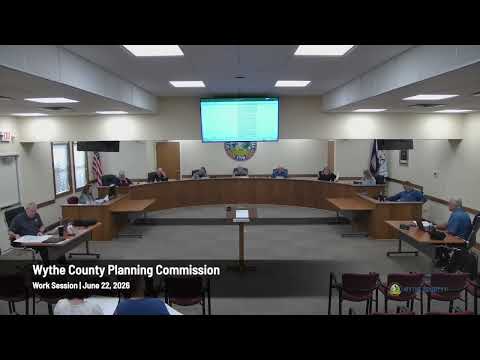
Wythe County planners debate small-scale agriculture allowances and permit fees in residential zones
Summary
Commissioners discussed adding limited small‑scale agriculture (chickens, small livestock) to lower‑density residential (R1) by right, concerns about a $500 variance fee, and asked staff to research definitions and model ordinances to avoid undue hardship for low-income residents.
Wythe County commissioners spent a substantial portion of the June 22 work session debating whether to allow limited agricultural activities in residential zones without requiring a variance, and how to define "small agriculture." Commissioners raised examples—backyard chicken coops without roosters, a few hens, hobby farms—and noted that the current draft often requires a variance (about $500) for animals in R1, which could impose a hardship on lower‑income residents.
Planning staff explained options: keep R1 restrictive and require variances, add explicit by‑right allowances with size or animal limits, or create a limited agricultural district (A2) with minimum acreage. Staff suggested some towns allow small flocks (hens only) with numerical limits; commissioners asked staff to compile examples and proposed language.
Why it matters: Commissioners flagged local economic realities, noting a county median income under $60,000 and a poverty rate (~15.2%) that makes a $500 variance burdensome for some families who rely on backyard poultry and small livestock for food and income.
Key details and definitions: Commissioners debated commonsense examples—horses generally need multiple acres, a backyard coop may be small enough to exempt, and a 16‑square‑foot building typically does not trigger a zoning permit (code intent was clarified). One commissioner suggested a "pet clause" or explicit allowance for a defined number of hens and no roosters in certain residential districts.
Next steps: The commission directed staff to research how other communities define "small agriculture," prepare model ordinance language (including potential exemptions or by‑right allowances and precise definitions), and return with recommendations at an upcoming meeting so the commission can consider streamlined options that reduce burden while minimizing nuisances to neighbors.