Get Full Government Meeting Transcripts, Videos, & Alerts Forever!
Get email alerts on the Tif District topic
No spam. Unsubscribe anytime.
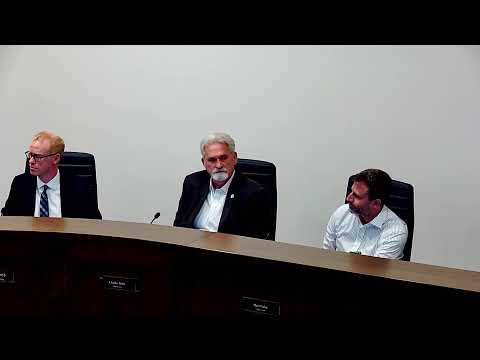
Northfield board sets public hearing on proposed TIF after weeks of debate and a night of public opposition
Summary
After a consultant presentation and lengthy public comment, the Northfield Village Board voted 6–1 on June 23 to set an Aug. 25 public hearing on a proposed tax-increment financing (TIF) district, drawing concerns from school officials and residents about tax shifts, schools’ revenues and the speed of the process.
The Village of Northfield will hold a public hearing on a proposed tax-increment financing district on Aug. 25, the Village Board voted 6–1 on June 23 after a presentation by TIF consultants and an extended public comment period.
Caitlyn Johnson, senior vice president at SB Friedman Development Advisors, told the board the proposed district spans five priority subareas identified in the village’s Vision 2040 plan. She outlined TIF mechanics, eligibility findings and an optimistic upper-limit budget of $175 million for eligible public improvements and developer reimbursements, and said the process would proceed next through a Joint Review Board meeting in mid-July and then the public hearing in August.
Why it matters: Residents, business owners and school officials said the proposal could shift tax burdens, impair school funding and move too quickly for meaningful public scrutiny. Sally Tomlinson, president of the New Trier High School board, warned that with a TIF the “incremental taxes” from new development would be directed to a municipal TIF fund for as long as the district exists — typically up to 23 years — and that the districts could face greater pressure to seek operating referendums to cover education costs.
Johnson said the Illinois TIF Act includes a reimbursement mechanism designed to offset added school costs if TIF-assisted residential development generates new students, and she estimated that a typical 50-unit multifamily development produces roughly five school-age children. She also said the proposed district has lagged in equalized assessed value growth compared with the rest of the overlapping school districts, a condition commonly used to support TIF eligibility.
Board discussion centered on scope and safeguards. Several trustees said they support a public hearing and additional study. Trustee Whitaker said the board has begun outreach with school leaders and described the TIF as “the best tool available to this village to create real investment in our village center.” Trustee Orth voted against advancing the hearing, saying the village should move more slowly and pursue more detailed block-by-block planning before authorizing TIF hearings.
Public reaction was intense and mixed. Developers and property owners challenged the consultant’s blight findings and the timing of the TIF proposal given recent zoning changes and pending private projects. Multiple speakers called for independent financial analysis, more educational outreach, and — notably — an advisory referendum so that voters could weigh in. A petition presented to the board that evening had collected more than 170 signatures asking the board to “slow the TIF process” and expand public engagement.
What passed: The board adopted ordinances setting the Aug. 25 public hearing and creating an interested-parties registry to notify residents of key TIF milestones. Deputy clerk roll-call recordings show Trusty Orth voted “no,” and Trustees Whitaker, Fowler, Gallen, Yetus and Elfman voted “yes.”
What’s next: The consultant and staff said the project moves to a Joint Review Board meeting in mid-July to review eligibility and financials; the August public hearing will be the main forum for detailed Q&A and for public testimony on the redevelopment plan. The board and staff pledged to post presentation materials and expand FAQs on the village website before the hearing.
The question of whether TIF is the right financing tool for Northfield — and whether residents have had sufficient notice and analysis — is likely to dominate the village agenda through the summer and into the fall.