Get Full Government Meeting Transcripts, Videos, & Alerts Forever!
Get email alerts on the Veterans History topic
No spam. Unsubscribe anytime.
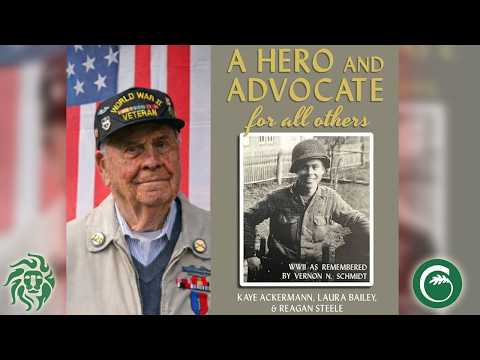
Authors, museum honor World War II veteran Vernon Schmidt and direct book proceeds to Honor Flight
Summary
At a Greensboro History Museum tribute, co-authors and museum staff honored World War II veteran Vernon Norin Schmidt, recounted his service with the 90th Infantry Division and the 712th Tank Battalion, and said proceeds from the new book will fund Central Valley Honor Flight trips for veterans.
Carol Gorsy Hart, director of the Greensboro History Museum, opened a program honoring Vernon Norin Schmidt and introduced the three co-authors who published a new book about his World War II service.
Laura Bailey, a Greensboro native and World War II historian who served as past president of the museum’s nonprofit, told the audience she and co-authors Reagan Steel and Coy collaborated after finding Schmidt’s story in a short film. Bailey said Schmidt spoke to children and groups about his experiences and that the authors aimed to preserve his recollections for future generations.
The program combined recorded testimony from Schmidt and live recollections by the authors. In a repeated refrain Schmidt used in interviews, speakers said he would deflect the label of hero, saying, “I’m not the hero. The heroes are the ones that didn’t come home,” a line the authors cited to underline his humility and lifelong advocacy for veterans.
Speakers provided context for Schmidt’s service: he served with the 90th Infantry Division and elements of the 712th Tank Battalion through Normandy, across France and into Germany. The authors recounted actions at Normandy and in the Arden campaign, described the unit’s role in liberating the Flossenberg concentration camp on April 23, and noted the emotional impact of seeing mass graves and survivors. The authors said, together, the 90th and the 712th lost about 2,963 men and captured tens of thousands of German prisoners during the European campaign.
Bailey and co-authors described their research process — archival visits, veteran interviews and documentary footage — and acknowledged the challenges of representing traumatic experiences accurately. They said the book, published in December 2024, was the result of multi‑year collaboration and included first‑hand interviews, military records and local research that connected Schmidt to veterans from Guilford County and beyond.
The authors also announced a charitable arrangement tied to the book: “Every penny” of proceeds will go to the Central Valley Honor Flight to pay for veteran trips, Bailey said, and urged attendees to buy or share the book to support that work.
An audience Q&A addressed research methods and historical details (including Schmidt’s voyage aboard the troop ship Queen Mary), the authors’ sourcing of unit records and how the book treats difficult episodes such as battlefield casualty rates and the liberation of camps. One author said it was important to present both the factual record and the personal, emotional context that helps later generations understand what veterans endured.
The program closed with practical information: museum and Honor Flight tables where attendees could learn about volunteering or signing veterans up for flights, and book sales and signing opportunities. Speakers thanked Schmidt’s family, museum staff and a local sponsor for supporting the evening.
The event did not announce any formal city action; it served as a public program to honor a veteran’s life and to publicize the book and its charitable proceeds.