Get Full Government Meeting Transcripts, Videos, & Alerts Forever!
Get email alerts on the District Priorities topic
No spam. Unsubscribe anytime.
Superintendent outlines district priorities; board raises concern about behavior interventions and extracurriculars
Summary
The superintendent reviewed the district's strategic priorities and key indicators, outlined a pilot critical-behavior unit for high-need students and a districtwide tech-replacement plan; board members pressed for clear accountability on extracurricular fundraising and coach oversight.
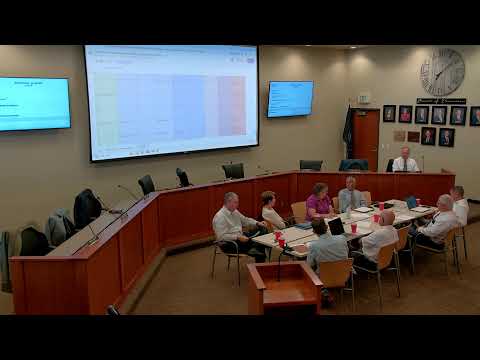
The superintendent used the June 25 retreat to report on progress against board priorities set a year earlier and to ask which priorities the board wants to carry forward into 2026-27. The presentation covered the district's strategic priorities, key performance indicators, special education restructuring, a critical-behavior pilot, facilities and technology replacement plans, and work on identification and tracking for advanced learners.
On student outcomes the superintendent said the district is tracking several KPIs, including a target of 80% of third graders reading at grade level, 70% of eighth graders at grade-level mathematics and 100% on-time graduation. He noted the public dashboard is live but had not been fully updated for year-end results.
Board members focused much of the discussion on behavior and extracurriculars. Staff described a planned "critical behavior" classroom to open at Spring Creek as a pilot intended to support a small number of high-need students ("the half dozen to a dozen students that seem to be consuming most of the bandwidth in our schools"). The superintendent said placements would typically last from about 10 to 45 days, include social-skills instruction and a leveled privilege system, and rely on a small team including a teacher, social worker and aides. Staff will return in August with a detailed implementation and staffing plan.
Board members raised repeated concerns about extracurricular programs, including fundraising oversight and cultural expectations. One board member said parents reported a cheer program asking freshmen to help raise $70,000 as a team; members emphasized that any fundraising must have a district spend plan. The board discussed enforcing codes of conduct, ensuring athletic directors and coaches follow district policy, and limiting the administrative burden on principals.
On operations, staff described a tech replacement plan intended to centralize device lifecycle management so schools are not forced to cover their own replacements, and said facilities planning is advancing with architect and engineering input. The superintendent also noted work on special education restructuring and a continuing effort to expand identification and supports for advanced learners.
What happens next: staff will present an August report on the critical-behavior unit, continue to refine the tech replacement and facilities plans, return in the fall with updated KPI and satisfaction-survey results, and draft clearer processes for extracurricular fundraising and coach accountability.