Get Full Government Meeting Transcripts, Videos, & Alerts Forever!
Get email alerts on the Infrastructure Water topic
No spam. Unsubscribe anytime.
Good Thunder seeks state PFA funding to replace aging water treatment plant and update mains
Summary
Good Thunder officials presented plans to replace an aging water treatment plant and upgrade water mains, seeking Minnesota PFA funding for a proposed $7.5 million treatment and source project; service-line replacements will be 100% grant-funded and could begin construction in late 2026–2027.
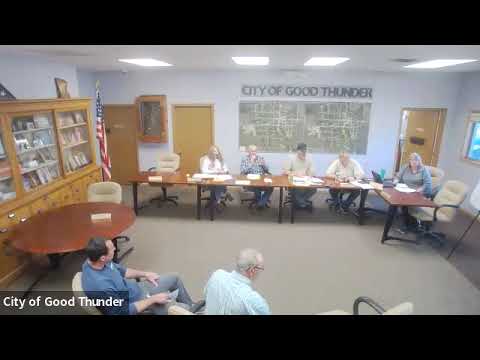
Mark, the lead presenter at Good Thunder's public hearing, told residents the town's water treatment plant and one of its wells are old and that the city is pursuing Minnesota Public Facilities Authority (PFA) funds to replace the treatment plant and related controls. "The water treatment plant is very old and the equipment is pretty deteriorated and everyone's holding it together," Mark said during the hearing, arguing that replacement is the city's long-standing goal.
The engineering team showed maps of the drinking-water distribution system and recommended replacing several cast-iron mains and upsizing key segments to 8 inches to preserve future capacity and interconnections. Mark said some short segments could be reduced to 6 inches in limited locations, but that eight-inch mains would maintain flexibility if development expands. He noted the cost difference in materials is modest: "if you're buying a stack of pipe, it's probably three or four bucks a foot more," he said.
Mark listed project estimates for the hearing record: drinking water source and treatment (new well and plant), $7.5 million; drinking water distribution, $1.15 million. He said the city applied to the PFA for those projects and that the sanitary-sewer work has been submitted for inclusion on the PPL so it can also qualify for PFA funding. The presentation included contingency language for USDA rural development in the public-hearing record in case funding approaches change.
The city also applied for grant funding to replace private service lines identified on the engineers' list. Mark said those replacements are expected to be 100% grant-funded and could proceed as early as this fall or more likely in 2027. Regarding how far replacement will extend, Mark said the planned work covers the lateral from the meter to the curb-side shutoff; property owners are typically responsible for pipe inside the house, and staff will confirm which laterals are lead.
Presenters credited recent investments in ultrasonic/remote water meters for reducing average daily usage from more than 55,000 gallons to about 35,000–40,000, improving the town's system metrics. Those conservation gains factored into engineers' assessment that the current water tower is adequate for present demand, though Mark said the town could plan for additional ground storage or a larger tower in the longer term.
Mark warned the schedule is approximate and depends on permit and equipment lead times: plans and specs are nearing completion, permits are next, bids could be advertised in late 2026, contracts awarded by the end of 2026 and construction could take about 18 months after award. He noted long lead times for some treatment equipment can create delays and advised the council to consider that when approving financing and bid schedules.
The hearing record includes cost and schedule slides and the project-team recommendation to pursue PFA funding. The public hearing was closed by motion at the end of the presentation and the council moved into its regular meeting.
Next steps: staff and the engineering team will finalize plans and specifications, pursue PFA scoring and funding, and return to the council with financing and bid documents according to the proposed schedule.