Get Full Government Meeting Transcripts, Videos, & Alerts Forever!
Get email alerts on the Transportation Plan topic
No spam. Unsubscribe anytime.
Douglasville hears 30-year transportation plan outlining 58 projects and roughly $190 million in needs
Summary
At a May 28 work session, AECOM project manager Mickey O'Brien presented a draft Comprehensive Transportation Plan covering 2026–2055 that identifies 58 projects with an estimated total cost of about $190 million and names Highway 5 as a top priority; council agreed to place the plan on the consent agenda for Monday.
At the Douglasville City Council legislative work session on May 28, AECOM project manager Mickey O'Brien presented a draft Comprehensive Transportation Plan (CTP) spanning 2026–2055 that identifies 58 projects with a total estimated cost of about $190 million and lists Highway 5 as the highest priority.
"This spans a 30-year time window between 2026 and 2055," O'Brien said, and described project organization into three tiers: short-term projects that can be implemented with local capital or limited bureaucracy, mid-term projects requiring planning and outside funding, and long-range arterial projects that will need substantial planning and external support.
Why it matters: the CTP sets the list of projects the city will preposition for federal and state funding through the Transportation Improvement Program (TIP). O'Brien told the council that adoption of the CTP starts a timeline for applying to regional funding programs: application windows in December–January, regional (ARC) evaluation February–May, recommended selections in July, and TIP finalization in November.
O'Brien summarized project categories and approximate costs provided in his presentation: 11 roadway safety and operations projects (about $6.1 million), seven intersection improvements (about $3.7 million), seven roadway-capacity projects (approximately $125 million), and 33 active-transportation projects (sidewalks, bike lanes, shared-use paths). He said the plan responds to public and steering-committee priorities — namely safer walkability and congestion relief at key bottlenecks such as Highway 5 and Chapel Hill Road.
Council members asked for clarifications about bridge inspections and pavement condition. O'Brien noted the city conducted a pavement evaluation with a reported score of 75, which he compared with a stated national average range of 60–65. Council members and the mayor emphasized that the Highway 5 bridge and connectivity across I‑20 and the railroad are priorities that will require partnerships with county, state and regional agencies.
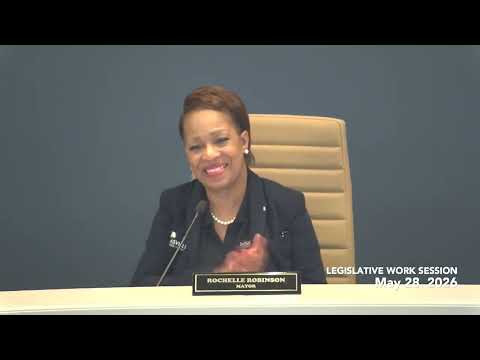
The presentation stressed that not all projects can be funded with local dollars and that many will depend on federal and state grant programs; O'Brien outlined a five-year phasing approach beginning with adoption, prepositioning projects for TIP consideration, and advancing priority tier-one projects. Mayor Rochelle Robinson and committee members thanked the AECOM team for the work and agreed to place the CTP on the Monday consent agenda for formal action and next steps.
Next step: the council signaled it will consider the CTP formally at the Monday voting meeting, where adoption would allow staff to preposition priority projects for upcoming funding windows.