Get Full Government Meeting Transcripts, Videos, & Alerts Forever!
Get email alerts on the Budget Appropriation Cap topic
No spam. Unsubscribe anytime.
Jersey City council authorizes temporary increase to 2026 spending cap amid fierce public pushback
Summary
After hours of public comment, the Jersey City Municipal Council unanimously adopted an ordinance allowing the city to exceed the normal 2% appropriation cap (up to 3.5%) to address unpaid bills and prior-year overexpenditures. Residents warned the move risks steep property tax hikes and pressed for line-by-line transparency and alternatives.
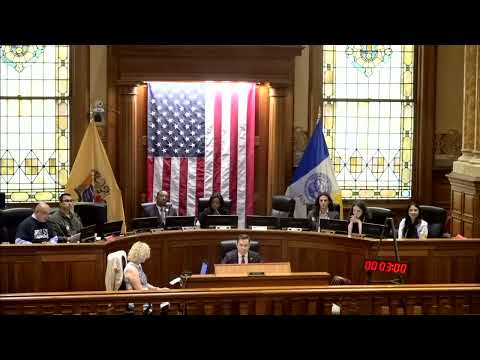
The Jersey City Municipal Council voted unanimously June 24 to adopt ordinance 26-033, temporarily authorizing the city to exceed its 2026 municipal appropriation limits by up to 3.5% so the administration can address a backlog of unpaid bills and overexpenditures from prior years.
The vote capped a more-than-five-hour public hearing in which dozens of residents expressed alarm at the prospect of higher property taxes and demanded detailed, line-by-line justification before any levy is raised. ‘‘You can't vote on something and say we're going to exceed something without giving the public a parameter,’’ said Ivon Bolston, a longtime resident, who pressed officials for specifics on how much the city intended to exceed the cap.
Mayor James Solomon framed the ordinance as a response to inherited fiscal problems. ‘‘We believed it to be somewhere between $125 million to $150 million, but we ended up finding a $255 million deficit,’’ he told the chamber, saying the cap authority is intended to allow the city to pay prior overexpenditures rather than immediately raise the tax levy. The mayor said the extraordinary appropriation would let the city ‘‘pay back all of those overexpenditures’’ and implement monthly monitoring and stricter budget controls. He also announced the administration's schedule for public engagement: a series of town halls starting Sunday night and the mayor's formal budget introduction July 15, with council budget hearings to follow.
Council members defended the vote as a procedural necessity to avoid concentrating all increases in a single future tax bill. ‘‘I wanted to make sure we could spread out the burden across Q3 and Q4 rather than concentrate it in Q4,’’ said Councilperson Little, who voted for the cap and urged more aggressive cuts and transparency in the coming budget process. Councilperson Lavaro, while voting yes on the ordinance, said he expected the administration to continue seeking non-tax solutions, including examining cannabis revenue and other one-time sources.
Residents, however, demanded sharper measures and faster action. Several urged temporary freezes on nonessential hiring, unpaid furloughs for high earners and greater scrutiny of contracts and pilot tax abatements. ‘‘Before we ask taxpayers to sacrifice more, the administration should explain why these increases were prioritized,’’ said a public commenter, who noted fixed-income households and small businesses would be hit first.
In response to the public's concerns, Mayor Solomon said the city had postponed an estimated tax vote originally planned for the meeting and will hold a special council session July 1 so residents can continue to weigh in. He repeated the administration's pledge to pursue state aid and to provide more detailed budget numbers before final adoption.
What happens next: the council's adoption of the cap is a legal step that permits the administration to prepare a budget that may exceed the normal 2% appropriation limit in 2026. The mayor must still present a full budget (scheduled July 15) and any actual tax-rate decisions will come through the council's formal budget hearings and final vote. Meanwhile, the administration has committed to monthly variance reporting and to pursuing state-level relief and reimbursement where possible.
Votes and formal action: ordinance 26-033 (vote to adopt cap bank) — passed unanimously, 9-0. The council also scheduled public town halls and a special July 1 session for additional public comment on the estimated tax resolution.