Get Full Government Meeting Transcripts, Videos, & Alerts Forever!
Get email alerts on the Enrollment Trends topic
No spam. Unsubscribe anytime.
Glendale study session lays out criteria and timeline for possible school consolidations as enrollment declines
Summary
District administrators presented a multi‑phase strategy to respond to long‑term enrollment decline, outlining four consolidation criteria (facility condition, enrollment projections, site capacity, safeguarding boundaries) and a Phase 2 timeline that could bring consolidation recommendations as early as January 2027.
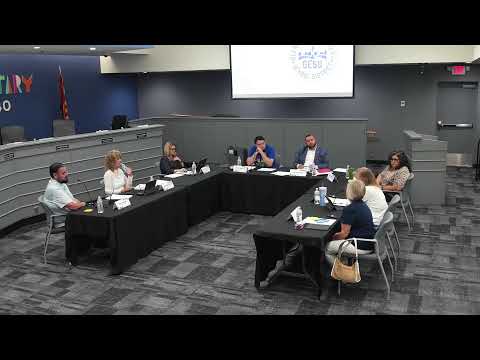
At a June 25 study session, Glendale Elementary District administrators detailed a multi‑phase strategy to address long‑term enrollment decline and the financial strain it imposes on the district.
Superintendent-level staff (presented by Mr. Gata Jones) reviewed phase one actions and described phase two as focusing on long-term financial solvency through school and department efficiencies, facility optimization, lease or repurpose strategies for vacant properties, and targeted marketing to reverse enrollment declines. The administration said any consolidation or closure recommendations will be driven by four primary criteria: facility condition, student enrollment projections, site capacity and utilization, and safeguarding district boundaries.
The presentation included projected school-size snapshots for 2026 and longer-term demographic projections through 2035 that show uneven enrollment across sites (with some schools operating near 400 students and others near 900). Administrators said facility condition and transportation impacts (for example, moving students long distances if a site closes) will be central to recommendation decisions.
Phase 2 timeline and possible consequences: The administration said January 2027 could include potential consolidation or closure recommendations for the 2027–28 school year; February 2027 could include reduction‑in‑force recommendations if necessary; and October 2027 may include further consolidation recommendations for 2028–29, depending on SFOB outcomes and enrollment counts.
Operational responses under consideration included outsourcing certain auxiliary services (transportation, maintenance, food and nutrition), recalculating district support staffing levels tied to enrollment, and transition planning including boundary adjustments and transportation-route changes. Administrators emphasized that no decisions had been made and that public hearings and statutory processes would occur if recommendations are developed.
The board and administration also flagged dependency and uncertainty around external factors: ongoing SFOB funding requests, a capital lawsuit outcome, and potential state legislative changes (including the 60/40 instructional-spending referral) that would affect the district’s capital and operating options.
The study session closed with an administrative commitment to base any later recommendations on objective data and to follow the public-notice and hearing requirements that accompany closure or consolidation actions.