Get Full Government Meeting Transcripts, Videos, & Alerts Forever!
Get email alerts on the Budget topic
No spam. Unsubscribe anytime.
Glendale Elementary District adopts 2026–27 budget amid warnings about possible 60/40 instructional mandate
Summary
The Glendale Elementary District Governing Board adopted the 2026–27 expenditure budget after a public hearing; administration warned that a proposed ballot referral (Senate Concurrent Resolution 1032) requiring 60% of dollars to be spent on instruction could force major reallocations, noting an $11 million shift would be needed and projected enrollment declines would further strain funds.
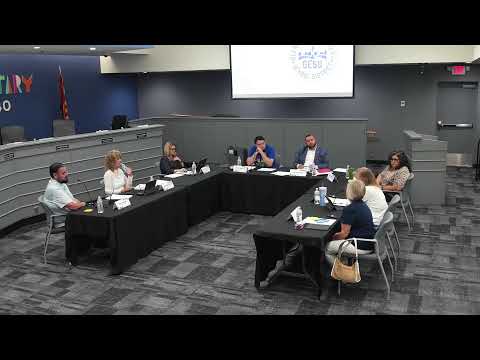
The Glendale Elementary District Governing Board adopted the 2026–27 expenditure budget as presented after a public hearing on June 25. The motion to adopt the budget passed unanimously.
Administration said the budget assumes an average daily membership of 7,488 students and anticipates a modest decrease in the district tax rate — "about 32 cents" — tied to a roughly 5% increase in assessed values. The presenter, Mr. Mike Barrian, summarized that the district shifted some prior capital allocations back to the M (general) budget for the coming year and that unrestricted capital is projected to decline from about $14.8 million in the most recent year to approximately $10.8 million next year.
Why it matters: Barrian warned of a separate, potential policy change — Senate Concurrent Resolution 1032 — that could require districts to spend 60% of each dollar in an “instructional” category. He said the district would need to increase instructional spending by about $11 million (or equivalently cut non-instructional spending by $11 million) to meet that threshold under current classifications. That challenge is heightened by an expected 20% drop in ADM over the next decade, which Barrian estimated would reduce revenue by roughly $13–14 million.
Barrian stressed that some categories critical to student support — including many special-education services and major facility maintenance — are classified outside the state’s instructional category and therefore would not count toward a 60% measure. He told the board meeting that the referral’s classification approach "does not fully recognize" services such as occupational therapy, physical therapy and speech therapy, which the district relies on to support student learning.
Board members asked whether meeting a fixed 60% target would force cuts to wraparound services or building maintenance; the administration replied that special-education obligations are legally required and that districts commonly absorb shortfalls by reallocating other funds, but doing so could trigger reductions in classroom site fund revenues if the instructional share fell below the threshold.
The board’s vote: The motion to adopt the 2026–27 expenditure budget passed by recorded voice vote with members Miss Wilson, Miss Bartell, Miss Pimentel, Mr. Harmio and the board chair voting in the affirmative.
Next steps and context: Administration noted statutory deadlines for proposing and adopting budgets (items filed no later than July 15) and described the district’s ability to present a revision in September if new state forms or funding information arrives late. The board will monitor enrollment counts (the 40th-day count) in October to revise staffing and funding projections.
The public hearing that preceded the adoption included commentary on the budget and on how external policy changes might affect district programming; the full budget adoption followed the hearing and proceeded into the board’s regular agenda.