Get Full Government Meeting Transcripts, Videos, & Alerts Forever!
Get email alerts on the Stablecoins topic
No spam. Unsubscribe anytime.
Conference presenter frames debate on the U.S. dollar's global role, highlights stablecoins
Summary
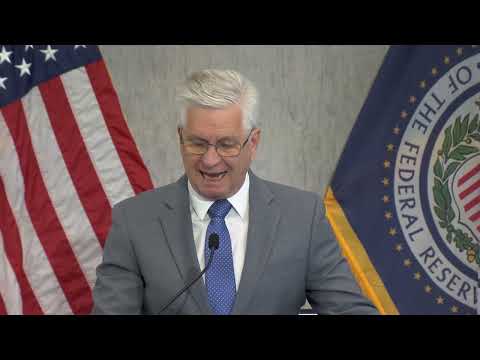
At the opening of the fifth conference on the international roles of the U.S. dollar, the presenter framed this year's research agenda around financial innovations—especially stablecoins—and previewed papers examining payments, FX effects, and links to U.S. safe assets and Treasury markets.
At the opening of the fifth conference on the international roles of the U.S. dollar, a presenter said the gathering will focus on how financial innovations—particularly stablecoins and tokenized assets—are reshaping the dollar's international role. "We are here to discuss the implications of financial innovations, especially digital assets such as ... stablecoins," the presenter said.
The presenter framed the event as a continuation of a multi-year research agenda to bring different perspectives on the forces that sustain the dollar's central place in the global financial system. He noted that while the traditional drivers—"the size, strength, and depth of the U.S. economy and financial markets" and trust in institutions—remain important, technological innovation is altering how households and businesses interact with dollars.
Previewing the conference program, the presenter said a set of papers will examine transformations in payment systems and foreign-exchange markets driven by stablecoins and blockchain-based infrastructure. "Documenting the rapid growth of stablecoin based transactions, decentralized foreign exchange trading, and alternative cross-border payment rails," he said, summarizing the empirical focus of several papers.
Another strand of research, the presenter said, will test whether stablecoin flows have spillover effects into broader financial markets, including possible impacts on exchange rates, dollar funding conditions, covered interest parity deviations, and cross-border capital movements. "These papers test whether stablecoin flows can affect exchange rates, dollar funding conditions, covered interest rate parity deviation, and cross-border capital movements," he said.
A major theme the presenter highlighted will be the relationship between dollar-backed stablecoins and U.S. safe assets. He said some papers explore whether stablecoins could create a new channel linking global liquidity demand directly to U.S. Treasury markets, a dynamic that could affect demand for Treasury securities and safe-asset mechanics.
The presenter also said several papers revisit classic international-finance questions through the lens of digital innovation, asking whether stablecoins might reinforce the dollar's global role by extending access worldwide or introduce new tensions by changing the nature of financial intermediation and cross-border capital flows.
The presenter opened the session by noting there would be "no forward guidance" in the remarks and offered condolences on the passing of former Fed chair Alan Greenspan, calling it "a sad day for the Fed." He closed by thanking participants and attendees for contributing to the conference over the next two days.
The conference proceedings will continue with paper presentations and discussions scheduled over the next two days.