Get Full Government Meeting Transcripts, Videos, & Alerts Forever!
Get email alerts on the Capital Plan topic
No spam. Unsubscribe anytime.
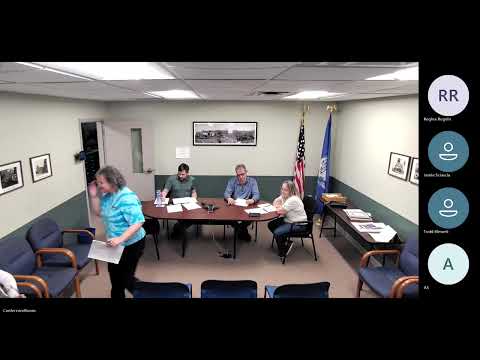
Killingworth selectmen debate multi-year capital plan as budget shortfall looms
Summary
Selectmen spent most of the meeting hashing out a multi-year capital improvement plan and financing options after staff warned a projected shortfall — driven by a heavy snow year and PFAS costs — could be larger than expected; members agreed to prioritize projects, improve public outreach and prepare materials for a likely July town meeting.
The Killingworth Board of Selectmen devoted the bulk of its meeting to the town's multi-year capital improvement plan (CIP), discussing how to prioritize projects and pay for them after town staff signaled the current fiscal year could end with a larger-than-planned shortfall.
Gina, presenting the budget report, told the board the town had "budgeted for a shortfall of 500,000 or so" but that because of an unusually heavy snow year and PFAS-related expenses the gap could be "a little bit worse." She said the town had received an approximately $31,000 Mohegan Pequot allocation and was awaiting word on a DMHAS prevention grant that officials hope will be decided before a July 1 start date; the DMHAS grant's status was described as uncertain.
Why it matters: the CIP shapes when roads are repaved, public safety vehicles are replaced and facilities are rebuilt. Board members said failing to present clear priorities and cost estimates to residents had created confusion at recent hearings and town meeting, complicating support for bonding or other financing approaches.
During discussion members weighed three broad options for financing big-ticket items: bond financing to spread costs over time, "pay-as-you-go" from reserves or annual transfers, and leasing for equipment such as fire apparatus. Several members said bonding could smooth out spikes in the mill rate but acknowledged it requires public support. One board member summarized the trade-off: bonding can free up short-term funds but requires public approval and long-term debt service; paying as you go avoids interest costs but can cause steep year-to-year tax increases.
The board also debated how to present CIP priorities. Members suggested a tiered list that distinguishes legally required or critical maintenance from desirable improvements, paired with annual target funding to "smooth out the curve" across years. One suggestion discussed among members was aiming for an annual capital target (an example figure mentioned in the discussion was $2 million) to avoid large fluctuations in later years; board members stressed that figure was illustrative and would require more analysis.
Specific projects were flagged as time-sensitive or already committed: the town has ordered a fire truck that will need financing and has incurred engineering costs on culvert repairs (Abner Lane), which also involve coordination with state property officials. Staff noted engineering expenses can make projects effectively started even if the capital line is pushed into a later year.
Next steps: Selectmen agreed to schedule meetings with department heads (fire, library, parks and recreation, public works) to refine priorities and to prepare clearer materials for the public. The board stated it will continue CIP work in August and anticipates presenting a current plan at a town meeting likely to be held in early July. Members asked staff to produce cost estimates and a publicly digestible prioritization list before that meeting.
The board's discussion underlined two constraints: the legal requirement to maintain an annual CIP and the practical challenge of communicating technical distinctions (encumbered funds, engineering costs, and funding sources) to taxpayers. Members repeatedly returned to the need for transparency about what the town must fund to remain "in business" versus what would be improvements or conveniences.
No formal vote on the CIP or financing approach was taken at the meeting; instead the board directed follow-up work, public outreach and department-level scheduling ahead of the next budget cycle and the upcoming town meeting.