Get Full Government Meeting Transcripts, Videos, & Alerts Forever!
Get email alerts on the Enforcement And Licensing topic
No spam. Unsubscribe anytime.
Connecticut pharmacy board accepts settlements, approves multiple licenses and flags out-of-state compounding
Summary
The Connecticut Commission of Pharmacy approved several license applications and accepted financial settlements in multiple disciplinary cases involving lost controlled substances and unauthorized compounding; commissioners emphasized 72-hour reporting, stepped-up oversight of GLP‑1 compounding and a restriction on a nonresident pharmacy.
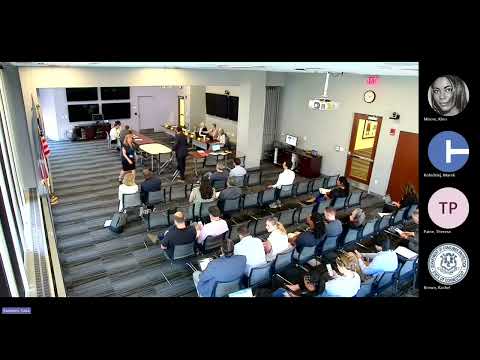
The Connecticut Commission of Pharmacy on Tuesday approved a slate of pharmacy license applications and accepted proposed settlements in several disciplinary cases, the board said.
The board voted to approve new and relocated pharmacy licenses, including an application for Community Health Center, Inc. DBA CHC Pharmacy New London and approvals or relocations for grocery and chain locations. Motions to approve those applications were seconded and carried by voice vote; a small number of abstentions were recorded on specific items.
The commission also heard summaries from the department’s legal staff about recent enforcement matters. The department presented case 2025-2284, alleging a controlled‑substance loss that was not reported within required timelines; the commission accepted a proposed voluntary payment of $1,500 and closed that matter as described by staff.
In a second, higher-profile matter (case 2025-1024), staff told the commissioners that a nonresident pharmacy had represented during its license application that it would not compound, but investigators later found the pharmacy had dispensed compounded drugs into Connecticut beginning in November 2023. The department reported that it documented 3,739 prescriptions dispensed without authorization. Under the proposed resolution, the respondent agreed to a voluntary monetary payment of $250,000, payable in installments, and to a restriction period that — as presented to the commission — reaches back to May 2025 and extends through June 1, 2027, during which the respondent may neither dispense compounded drugs into Connecticut nor apply for approval to do so. The department said the respondent has since ceased compounding into the state and created a six‑person compliance team; staff noted no patients were reported harmed.
A department presentation also described case 2026-103, in which staff reported an unreported loss of roughly 500 tablets (audits later indicating a slightly higher count) and recommended a $2,000 voluntary payment; commissioners approved that settlement. In case 2026-202, involving an alleged dispensing error that produced hives in a patient, the department said staff responded to the family, called the prescribing provider and the proposed settlement included a $1,500 payment; the commission accepted the recommendation.
The department emphasized the importance of timely reporting of missing controlled substances and safe compounding practices. "Compounding is inherently high risk. Minor contamination can lead to serious harm or even death," the department’s attorney said during the legal docket, urging care in oversight and reporting.
Commissioners questioned staff about staffing turnovers, how gaps in management are handled and whether additional inspections (for example, 797 inspections for sterility) would be required before compounding resumes after a restriction period. The department said facility inspections and compliance checks would be part of any return-to-practice review.
Votes at a glance
- Case 2025-2284: accepted settlement, $1,500 — approved by voice vote. - Case 2025-1024: accepted proposed settlement, $250,000 and restriction period (May 2025 through June 1, 2027, as presented) — approved by voice vote; one commissioner noted a recusal on this item. - Case 2026-103: accepted settlement, $2,000 — approved by voice vote. - Case 2026-202: accepted settlement, $1,500 — approved by voice vote. - Multiple licensing items (community health center, retail relocations and remodels, CVS locations and independents): approved by voice votes; select abstentions were recorded on specific items.
Why it matters
Commissioners said the actions reflect both enforcement and prevention: settlements address past lapses, while tighter oversight — especially of compounding and out-of-state supply chains such as GLP‑1 products — aims to reduce future risk. Staff emphasized that even a single missing tablet must be reported within the 72‑hour window so the department can begin reconciliation and investigation.
What’s next
The department said it will continue to refer complex compounding or hub‑and‑spoke models for deeper drug‑control review, and that any return to compounding by a restricted pharmacy would include inspection and compliance requirements before approval.